
Optimize Ad Campaigns with Competitor Ad Intelligence
Most ad campaigns don't fail because of bad products. They fail because the same creative keeps running after the audience has tuned it out, or because budget is spread across too many ad sets that never gather enough data to exit the learning phase. Optimizing ad campaigns is the discipline of fixing those two problems: knowing what to change, and changing it before the spend is wasted.
This guide covers a practical optimization loop built on platform metrics and competitor ad intelligence. It shows how to diagnose underperforming campaigns, use ad spy data to inform creative decisions, and build a testing cadence that compounds results instead of resetting them.
What "optimize ad campaigns" actually means
Optimize Ad Campaigns with Competitor Ad Intelligence - What "optimize ad campaigns" actually means.
Ad campaign optimization is the ongoing process of adjusting targeting, creative, budget, and bidding to improve the outcomes that matter to your business — conversions, ROAS, cost per acquisition, or qualified pipeline. It is not a one-time setup task.
A useful definition has three parts:
- Diagnosis: reading platform metrics to find where performance is leaking.
- Intervention: making a change that addresses the cause, not the symptom.
- Validation: confirming the change worked before scaling it.
Without all three, optimization becomes random tweaking. That is why so many accounts look busy but never improve.
Start with the metrics that reveal the real problem

Optimize Ad Campaigns with Competitor Ad Intelligence - Start with the metrics that reveal the real problem.
Before touching a campaign, establish which metric is actually broken. Meta's own guidance for campaign optimization emphasizes monitoring amount spent, impressions, link clicks, results, CPM, CTR, CPC, and cost per result, and using breakdowns by demographics, country, placement, and creative asset to find where performance diverges.
A simple diagnostic order works well:
- Is CTR falling while CPM is stable? The creative is fatiguing. The audience has seen it too often.
- Is CPM rising while CTR holds? Auction pressure or audience saturation is the issue. Consider broadening or refreshing placements.
- Is CTR healthy but conversion rate weak? The problem is likely the landing page, offer, or audience quality — not the ad.
- Is cost per result rising across all creatives? Check for learning-phase resets caused by too many edits or fragmented ad sets.
Meta's documentation notes that learning stabilizes with a minimum of 50 events over a 7-day period, and that consolidating audiences with similar targeting helps ad sets exit the learning phase faster. Frequent significant edits can trigger a new learning period, which is why batching changes matters.
Use competitor ad intelligence to shorten the guesswork

Optimize Ad Campaigns with Competitor Ad Intelligence - Use competitor ad intelligence to shorten the guesswork.
Platform metrics tell you what happened in your account. They don't tell you what the market is responding to right now. That gap is where competitor ad intelligence earns its place in the optimization workflow.
Tools like PrimeSpy let you search a database of over 120 million ads across Meta and TikTok, filter by keyword, URL, or advertiser, and inspect signals such as reach, spend, and duplicate counts. Because long-running ads with many duplicates are usually profitable ads, those signals act as a proxy for what is working in a niche.
A practical way to fold this into optimization:
- Find the pattern, not the ad. Look at 10–15 top-performing competitor creatives in your category. Note the hook style, the first three seconds, the offer framing, and the format (static, video, carousel, UGC).
- Check the landing pages. Ad trackers that surface landing page changes show when a competitor swaps an offer or pricing page — often a sign they are testing a new angle.
- Track refresh cadence. If a competitor launches new creatives every two weeks, your monthly refresh may be too slow for the same auction.
- Validate before copying. A competitor's winning ad works for their audience, price point, and brand. Use it as a hypothesis, not a template.
For teams comparing tooling options, the PrimeSpy vs AdSpyder comparison breaks down how coverage, pricing, and tracking workflows differ.
Build a creative testing cadence that survives the learning phase
Optimize Ad Campaigns with Competitor Ad Intelligence - Build a creative testing cadence that survives the learning phase.
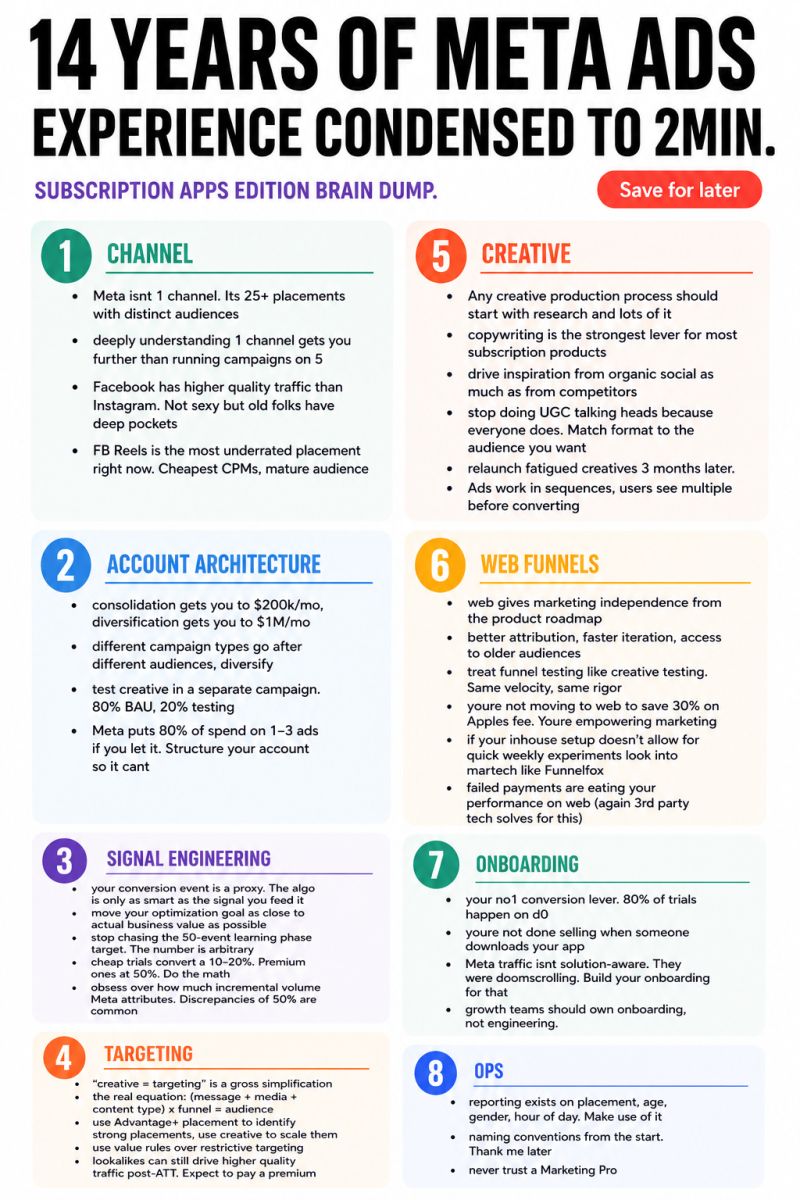
Creative testing is where most optimization effort should go, because creative quality is one of the strongest levers on ad performance. But testing has to be structured so it doesn't constantly reset learning.
A workable cadence:
- Test in batches. Launch multiple creative variations at once rather than one at a time. This collects comparable data faster.
- Keep audience and budget constant during a test. If you change targeting and creative simultaneously, you can't attribute the result.
- Set a minimum data threshold. Don't judge a creative on 500 impressions. Wait for enough link clicks or conversions to be statistically meaningful for your account size.
- Retire losers quickly, scale winners gradually. Increase budget on winners in small increments to avoid re-entering the learning phase.
- Log every result. A simple creative log — hook, format, offer, result — becomes the most valuable asset in the account over time.
Meta's guidance also recommends using the Ads Library for creative inspiration and validating creatives through A/B testing. Competitor ad intelligence tools extend that by making the library searchable and filterable at scale, which matters when you need to research dozens of advertisers rather than one.
Fix targeting and structure before blaming creative
Creative gets most of the attention, but structural problems quietly cap performance. Common issues:
- Overlapping ad sets. Multiple ad sets targeting similar audiences compete against each other and split the event volume needed to learn.
- Too many narrow audiences. Very small audiences raise costs and accelerate creative fatigue because the same users see the same ads repeatedly.
- Excessive edits. Significant changes to an ad set can reset learning. Batch changes and avoid editing during a scaling push.
- Ignoring placement breakdowns. A creative that wins in Feed may lose badly in Reels or Stories. Break down performance by placement before cutting it.
A useful rule: consolidate first, then test creative. Structural cleanup usually produces faster gains than another round of ad variations.
Connect optimization to a broader measurement stack
Optimization decisions are only as good as the data feeding them. Platform dashboards show in-platform performance, but they rarely show the full picture of how campaigns interact with retention, lifetime value, or creative workflow.
Two practical additions:
- A performance marketing stack review. Attribution, creative testing, and ad intelligence tools each solve a different part of the problem. The performance marketing tools stack guide walks through how to assemble them without overlap.
- A creative workflow layer. Research from ad intelligence tools needs somewhere to go. Pairing discovery with a structured creative brief process keeps testing organized rather than reactive.
For teams that want to see how ad intelligence fits alongside creative management platforms, the ad creative intelligence platform comparison covers the trade-offs.
A weekly optimization routine
A repeatable weekly loop keeps optimization from becoming a firefight:
- Monday — review. Pull the previous week's metrics. Identify the single biggest performance leak.
- Tuesday — research. Use competitor ad intelligence to find 5–10 new creative patterns or offers worth testing.
- Wednesday — build. Produce 3–5 variations based on those patterns, keeping brand and offer consistent.
- Thursday — launch. Add the new creatives to a controlled test. Batch any structural changes.
- Friday — monitor. Check for learning-phase resets, spend anomalies, and early CTR signals.
- End of week — log. Record what was tested, what changed, and what the early data suggests.
This routine works because it separates diagnosis, research, production, and validation into distinct steps. It also prevents the most common optimization mistake: changing five things at once and learning nothing.
Related reading
- How to Use PrimeSpy with MagicBrief (2026 Workflow) - Learn how to pair PrimeSpy ad intelligence with MagicBrief creative workflows before the July 2026 shutdown, plus Canva Grow migration steps.
- PrimeSpy vs Adplexity Social vs Swipekit: 2026 Comparison - Compare PrimeSpy, Adplexity Social, and Swipekit for Facebook Ad Library downloads, competitor tracking, creative research, and pricing in 2026.
Sources and further reading
- 8 ad campaign optimization strategies to boost performance - Boost your ad campaign performance with eight proven optimization strategies. Learn how to leverage data, refine targeting and maximize ROAS.
- Understanding and optimizing your ad campaign - This topic describes best practices to help you understand and optimize your Meta ad campaign.
- What strategies do you use to optimize social media ad campaigns efficiently? : r/growmybusiness - Hi everyone,
FAQ
How often should I optimize an ad campaign?
Review performance weekly and make structural changes less frequently. Creative refreshes can happen on a two-to-four-week cycle depending on spend and audience size. High-spend accounts in competitive niches often need faster refresh rates because creative fatigue sets in sooner.
What is the fastest way to improve a struggling campaign?
Check for structural problems first — fragmented ad sets, learning-phase resets, or a broken landing page. If structure is sound, the issue is usually creative fatigue. A new hook or format often restores performance faster than targeting changes.
Can competitor ad intelligence replace platform data?
No. Competitor ad intelligence shows what is working in the market; platform data shows what is working in your account. The two answer different questions. Use competitor research to generate hypotheses and platform metrics to validate them.
What metrics matter most for optimization?
It depends on the objective, but CTR, CPM, cost per result, and conversion rate form a useful core set. CTR and CPM diagnose creative and auction health; cost per result and conversion rate show whether the campaign is delivering business value.
Do I need a paid ad spy tool to optimize campaigns?
Free options like the Meta Ad Library are useful for checking individual advertisers. Paid tools become worthwhile when you need searchable filters, spend and reach signals, competitor tracking with notifications, and coverage across multiple platforms like Meta and TikTok.
Conclusion
Optimizing ad campaigns is less about finding a secret setting and more about running a disciplined loop: diagnose the real problem, research what the market is responding to, test in controlled batches, and validate before scaling. Platform metrics tell you where performance is leaking. Competitor ad intelligence tells you what to try next. Together, they turn optimization from guesswork into a repeatable process — one that improves ROAS without resetting the learning phase every time you make a change.