

Foreplay: What It Is, Why It Matters, and 20+ Ideas to Try
Foreplay is one of the most misunderstood parts of sex. Many people treat it as a quick warm-up before the "real" event, but research and lived experience tell a different story: foreplay is often where arousal, connection, and satisfaction are actually built. Whether you call it foreplay, outercourse, or simply "the buildup," the acts that create sexual desire and anticipation deserve more attention than they usually get.
This guide breaks down what foreplay actually is, why it matters physically and psychologically, how long it tends to last, and practical ideas you can try tonight.
What Is Foreplay?

Foreplay: What It Is, Why It Matters, and 20+ Ideas to Try - What Is Foreplay?.
Foreplay is a set of emotionally and physically intimate acts between partners meant to create sexual arousal and desire for sexual activity. It can include kissing, sexual touching, removing clothes, oral sex, manual sex, sexual games, and roleplay. But foreplay is not limited to physical acts. Mental and verbal activities—like sexting, flirty glances, or a suggestive phone call—can also function as foreplay.
That broad definition explains why foreplay means different things to different people. For one couple, a slow massage and deep kissing might be the core of foreplay. For another, it might be dirty talk and roleplay. There is no single correct script.
Some sources use the term "outercourse" to describe sexual activity that does not involve penetrative intercourse. Foreplay can overlap with outercourse, but it is not identical. Foreplay is defined by its function—building arousal and desire—rather than by a specific list of acts.
Why Foreplay Matters: Physical and Psychological Effects

Foreplay: What It Is, Why It Matters, and 20+ Ideas to Try - Why Foreplay Matters: Physical and Psychological Effects.
Foreplay is not just a nicety. It produces measurable physical and psychological changes that shape the entire sexual experience.
Physical Effects
When partners engage in foreplay, blood flow increases to the sexual organs. For male partners, this leads to an erection. For female partners, it results in clitoral erection and vaginal lubrication. That lubrication is not a minor detail: a lack of it can cause painful intercourse, known as dyspareunia.
Arousal also makes nerve endings more sensitive to external stimuli. The body releases fluids that prepare the genitals for intercourse. These physical responses tend to happen more quickly for male partners than for female partners, which is one reason foreplay often plays a more critical role for women. Sexologist Dr. William Robinson noted that male partners can sometimes perform intercourse without much foreplay, while female partners generally require longer periods of stimulation to become sufficiently aroused and pleasured.
Foreplay has also been positively associated with female orgasm. In other words, the time spent before intercourse is not separate from satisfaction—it is often the foundation of it.
Psychological Effects
Psychologically, foreplay lowers inhibitions and increases emotional intimacy. Partners who engage in extended foreplay often report a mutual experience of understanding and emotional connection. Foreplay also creates space to communicate preferences more easily, which can make the entire sexual interaction more comfortable for both people.
From a biological perspective, foreplay may seem costly in terms of reproduction because it delays intercourse. But research suggests it is a worthwhile strategy for increasing fertility in both animals and humans. The physical and psychological effects of foreplay influence the neurohypophysial hormone, which can increase sperm production during extended foreplay and raise the chances of conception.
How Long Does Foreplay Last?
Foreplay: What It Is, Why It Matters, and 20+ Ideas to Try - How Long Does Foreplay Last?.
One survey of 152 heterosexual couples found that the average time spent on intercourse was 7 minutes, while foreplay lasted about 12 minutes. Notably, neither partner in those relationships was satisfied with the duration of foreplay. This suggests a gap between what couples desire and what they typically experience.
The same study found that the desired length of foreplay was about the same for men and women. Men were also reasonably good at perceiving how much foreplay their partner wanted, though both partners still wanted more than they were getting.
In a larger global study of about 12,000 individuals from 27 countries, physical foreplay was rated as "very important" by 63% of men and 60% of women. That is a striking level of agreement across cultures and genders.
Does Pornography Change How Much Foreplay People Want?
Foreplay: What It Is, Why It Matters, and 20+ Ideas to Try - Does Pornography Change How Much Foreplay People Want?.
A common assumption is that pornography and sexual media reduce interest in foreplay by presenting sex as immediate and penetration-focused. Research on individuals in committed romantic relationships suggests otherwise. Pornography and sexual media usage does not appear to play a significant role in satisfaction with time spent on foreplay, even though other aspects of sexual satisfaction can be affected.
In practice, this means foreplay remains an important part of the sexual script for most people. Individuals still need roughly the same amount of foreplay to become aroused, regardless of what they consume in sexual media.
Foreplay Ideas and Techniques
If you want to expand your foreplay repertoire, the key is to engage more of the senses and build anticipation over time. Here are practical categories to explore.
1. Start Outside the Bedroom
Foreplay does not have to begin the moment you are alone together. Extended foreplay can involve SMS messaging, phone calls, online chat, or other forms of distance communication. The goal is to stimulate fantasizing about the upcoming encounter. This form of foreplay requires no physical presence—the tantalization builds sexual tension on its own.
A suggestive text in the middle of the day, a voice note describing what you want to do later, or a flirty photo can all function as foreplay. The anticipation becomes part of the experience.
2. Use Games and Roleplay
Sexual role-playing and sex games can create sexual interest in a low-pressure way. A card or board game can be played for foreplay, with the objective of indulging fantasies. The loser might be required to remove clothing, give a sensual foot massage, or perform whatever the winner wants to try.
Roleplay can also involve costumes to create and maintain a sexual fantasy. One popular option is the "strangers for a day" game. The couple meets in a public place and pretends to be strangers meeting for the first time. The objective is to flirt and seduce each other without doing or saying anything they normally would not do on a first meeting.
Another option is to build a sexual story together. One partner starts with a sentence, and the other continues until the story becomes sexually explicit. This creates an opportunity to express fantasies in a collaborative way.
3. Set the Atmosphere
A sensuous atmosphere can enhance foreplay. Candles, drinks, sensual food, or suggestive clothing all contribute to the mood. Even the suggestion of sex toys, fetish play, sexual bondage, or blindfolding can signal sexual interest and build anticipation.
Temperature play is another option. Ice, warm wax, or lubricants with heating and cooling sensations can introduce new sensory experiences. The goal is to engage more of the five senses, not just touch.
4. Learn to Talk Dirty
Dirty talk is a skill, and it takes practice. Different people respond to different styles. Some prefer flirtier verbal interplay, while others want more explicit language. Here are some practical tips:
- Ease into it. Do not start at maximum intensity, especially with a new partner. Experiment with tones and see what your partner enjoys.
- Add compliments. Telling your partner how aroused they make you can enhance their own stimulation. Call out what you find sexy about them or what they are doing.
- Ask questions. Questions like "Do you like that?" or "What do you want to do to me?" can amplify arousal and create a feedback loop.
- Describe what is happening. Narrating the action can make foreplay more enjoyable and is a core component of dirty talk.
- Explain what you are about to do. Anticipation increases when you tell your partner what you plan to do next.
- Do not force it. Dirty talk should feel natural and fun. If someone is not responding, take a step back.
5. Try Tantric Foreplay
Tantric foreplay is the first step in a tantric lovemaking session. Tantric sex is against rushing toward orgasm, so tantric foreplay is a way to prepare the body and mind for union between two bodies.
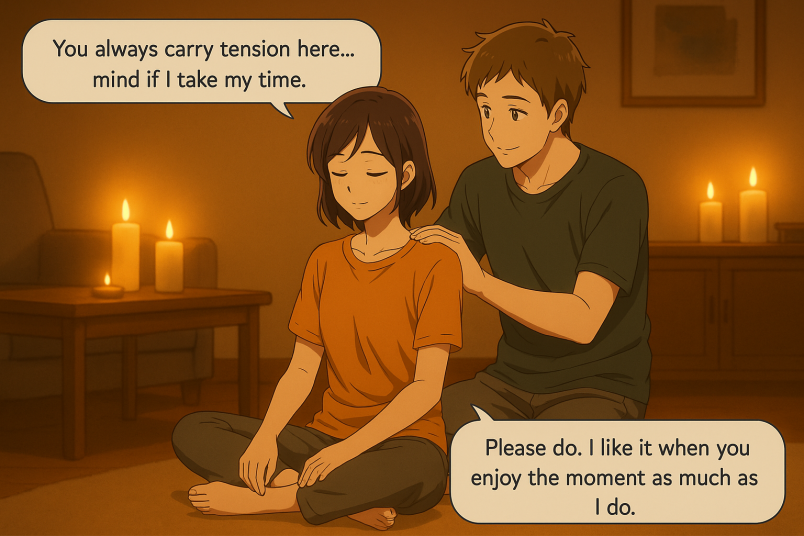
Tantric foreplay may include sensual baths in a relaxing atmosphere, fragrance oil, and candles. A common tantric practice is sitting cross-legged facing each other, staring into each other's eyes, and touching each other's palms. Tantra massages are also common. The massage is not for reaching orgasm but for giving each other pleasure and connecting on a spiritual level.
The emphasis in tantric foreplay is on giving each other time to connect spiritually and emotionally before physical union.
6. Include Oral Sex
Oral sex is one of the most popular forms of foreplay. Past studies have shown that around 40% of people in 26 different countries had engaged in oral sex. Some people feel extra gratification in receiving oral sex, while others enjoy giving it.
Oral sex can be part of foreplay or the main event, depending on the couple. The more activities you can include during foreplay, the more you can mix things up and reduce the chances of bedroom boredom.
Foreplay Tips for Newcomers
If you are new to intentional foreplay, these tips can help you get started:
- Communicate with your partner. Ask what they enjoy and share what you enjoy. Foreplay is a conversation, not a performance.
- Take your time. There is no timer. Slowing down often increases arousal.
- Share fantasies and be open to experimentation. You do not have to try everything, but being open to new ideas can deepen intimacy.
- Be intentional and enthusiastic with your words and touching. Enthusiasm is often more arousing than technique.
- Think outside the bedroom. Foreplay can start hours before you are alone together.
- Try dirty talk. Start small and build from there.
Common Questions About Foreplay
Is foreplay necessary?
The necessity of foreplay is subjective and varies from couple to couple. Some couples may not need much buildup to feel ready for intercourse, while others desire extended outercourse and flirty foreplay. That said, foreplay is important because it sets the stage for a more sensual experience. For most partners, trying to have satisfying sex without foreplay is difficult.
Is oral sex part of foreplay?
Yes. Oral sex is one of the most common forms of foreplay, though it can also be the main sexual activity for some couples. There is no rule that oral sex must lead to intercourse.
How long should foreplay last?
There is no universal answer. Research suggests the average is around 12 minutes, but many couples want more. The right amount of foreplay is whatever leaves both partners feeling aroused, comfortable, and connected.
Can foreplay happen without physical touch?
Yes. Sexting, phone calls, suggestive messages, and even flirty glances can function as foreplay. Mental and verbal acts can create arousal and anticipation without physical presence.
What if my partner and I want different amounts of foreplay?
This is common. The best approach is direct communication. Share what you need to feel aroused and ask your partner what they need. Foreplay is a collaborative process, and preferences can change over time.
Related reading
- Dropispy Review 2026: Honest Verdict for Dropshippers - Hands-on Dropispy review: features, data depth, Chrome extension reliability, pricing, and who should use this ad spy tool vs skip it in 2026.
- Pipiads Tutorial: Find Winning Ads Step by Step - Learn how to use Pipiads in this practical tutorial: search winning ads, filter by performance, track competitors, and spot product opportunities.
- PrimeSpy vs SellerCenter: Which Ad Tool Wins in 2026? - Compare PrimeSpy and SellerCenter for ad intelligence, product research, competitor tracking, and pricing. See which platform fits your workflow in 2026.
Sources and further reading
- Foreplay | The Complete Winning Ad Workflow - Save ads from Ad Libraries - From advertising inspiration to creative analytics. The best way to save ads from TikTok, and Facebook Ad Library, organize and share with your team.
Conclusion
Foreplay is not a prelude to sex—it is sex. It builds arousal, deepens emotional intimacy, and directly influences satisfaction and orgasm. The physical changes it produces, from increased blood flow to natural lubrication, make intercourse more comfortable and pleasurable. The psychological effects, from lowered inhibitions to improved communication, strengthen the relationship itself.
The most important takeaway is that there is no single correct way to do foreplay. What matters is that you and your partner communicate, experiment, and treat the buildup as valuable in its own right. Whether you start with a suggestive text in the morning, a slow massage in the evening, or a shared fantasy whispered in the dark, the time you spend creating desire is time well spent.
For more on building intimacy and communication in relationships, explore resources on sexual health and psychology from trusted sources like Wikipedia's overview of foreplay and Trojan's practical foreplay guide.