
Dropshipping Suppliers: How to Find Reliable Partners in 2026
Choosing the right dropshipping suppliers can make or break your store. A dependable supplier keeps delivery times short, stock levels accurate, and product quality consistent. A bad one creates chargebacks, angry customers, and a brand reputation that never recovers.
This guide walks through the main types of dropshipping suppliers, how to vet them, where to find them, and how to validate products before you ever list them. Whether you are launching your first store or replacing a supplier that keeps disappointing you, you will find a practical framework here.
What Is a Dropshipping Supplier?
Dropshipping Suppliers: How to Find Reliable Partners in 2026 - What Is a Dropshipping Supplier?.
A dropshipping supplier is a manufacturer, wholesaler, or distributor that stores inventory and ships orders directly to your customers on your behalf. You never touch the product. When a customer buys from your store, you forward the order to the supplier, who picks, packs, and ships it under your brand or in plain packaging.
The model removes the need for upfront inventory investment, warehousing, or fulfillment staff. Your main jobs become product selection, marketing, customer service, and supplier management.
Types of Dropshipping Suppliers

Dropshipping Suppliers: How to Find Reliable Partners in 2026 - Types of Dropshipping Suppliers.
Suppliers fall into a few broad categories, each with different strengths and trade-offs.
1. Overseas Marketplaces and Suppliers
Platforms like AliExpress, CJ Dropshipping, and Alibaba connect you with manufacturers, mostly in China. They offer enormous product variety, low unit costs, and no minimum order quantities.
Pros:
- Massive product catalog
- Low per-unit cost
- Easy to test products without bulk orders
Cons:
- Shipping can take 10–25 days without premium lines
- Quality control varies widely
- Communication and dispute resolution can be slow
2. US-Based Dropshipping Suppliers
US-focused platforms such as TopDawg aggregate verified American wholesalers and dropshippers. These suppliers typically ship from domestic warehouses, which means faster delivery and fewer customs headaches.
Pros:
- 2–5 day shipping within the US
- Easier returns and customer service
- No import duties for domestic orders
Cons:
- Higher product costs than overseas options
- Smaller catalog depth in some niches
- Some suppliers charge membership or access fees
3. All-in-One Dropshipping Platforms
Services like Zendrop combine supplier access, automated fulfillment, branded packaging, and fast shipping lanes into one dashboard. They aim to remove the manual work of coordinating with multiple suppliers.
Pros:
- One dashboard for products, orders, and fulfillment
- Often include US and overseas fulfillment options
- Built-in automation for Shopify and other platforms
Cons:
- Monthly subscription costs
- Product pricing may be higher than sourcing directly
- You depend on the platform's supplier network
4. Direct Manufacturer and Wholesale Relationships
As your store grows, you can approach manufacturers or wholesalers directly. This gives you better margins and more control, but usually requires a business license, tax ID, and sometimes minimum order volumes.
How to Vet a Dropshipping Supplier

Dropshipping Suppliers: How to Find Reliable Partners in 2026 - How to Vet a Dropshipping Supplier.
Before you add a supplier to your store, run them through this checklist.
Check Shipping Times and Origin
Ask for sample orders to your target market. If a supplier claims 7-day US delivery but ships from overseas, verify it with a real test order. Shipping time is one of the top reasons customers abandon or refund orders.
Order Samples
Never sell a product you have not held in your hands. Order samples from multiple suppliers and compare build quality, packaging, and accuracy against the listing photos.
Test Customer Support
Send a support inquiry before you commit. Measure response time, clarity, and willingness to solve problems. A supplier that ignores pre-sale questions will ignore post-sale issues too.
Review Return and Refund Policies
Understand exactly what happens when a customer wants a refund or receives a damaged item. Who pays return shipping? Is there a restocking fee? Get these answers in writing.
Check Inventory Sync Capability
If you use Shopify, WooCommerce, or another platform, confirm the supplier supports real-time inventory sync. Selling products that are out of stock leads to cancellations and negative reviews.
Where to Find Dropshipping Suppliers
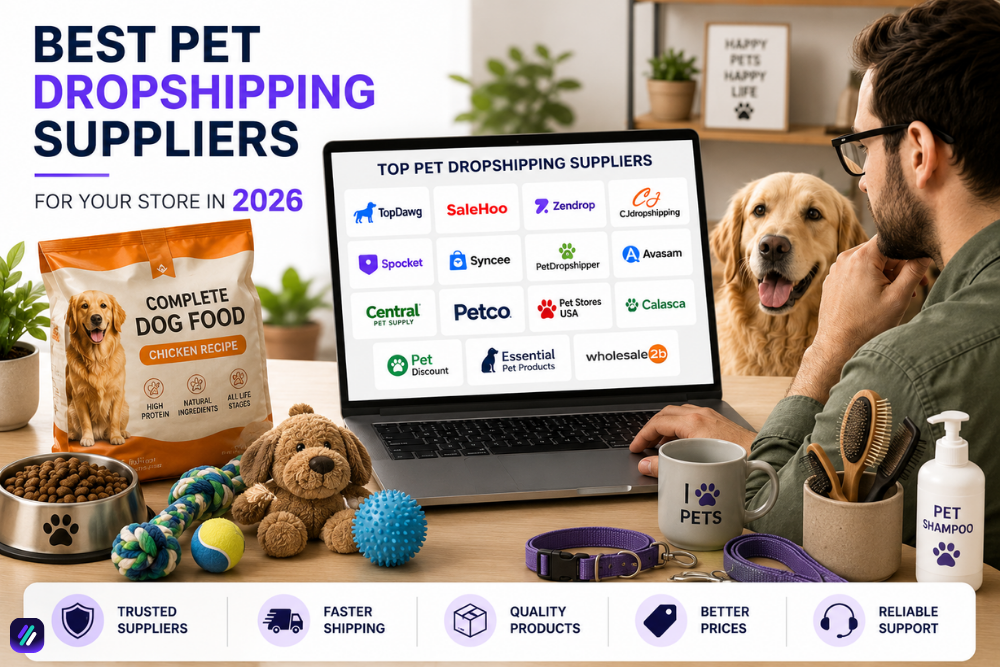
Dropshipping Suppliers: How to Find Reliable Partners in 2026 - Where to Find Dropshipping Suppliers.
You have several practical starting points depending on your budget and niche.
Supplier Directories
Directories like TopDawg list thousands of verified US-based dropshippers across categories such as pet supplies, home decor, fashion, electronics, and health and beauty. A directory saves you from cold-emailing dozens of wholesalers individually.
Marketplaces
AliExpress and CJ Dropshipping remain popular for low-cost product testing. They are not always the best long-term fulfillment partners, but they are useful for validating demand before you invest in a domestic supplier.
Google and Industry Research
Search for "[your niche] wholesale supplier" or "[your niche] dropshipper." Many legitimate wholesalers do not advertise on marketplaces. You will need to reach out directly, request a wholesale application, and negotiate terms.
Trade Shows
For serious store owners, trade shows like ASD Market Week or White Label World Expo connect you directly with manufacturers and distributors. The relationships you build there often lead to better pricing and exclusive products.
Product Validation Before You Commit to a Supplier
Finding a supplier is only half the battle. You also need to know that the product will actually sell. This is where ad intelligence tools become useful.
Before you lock in inventory commitments or spend money on store setup, look at what is already working in your niche. Tools like PrimeSpy let you search winning ads across Facebook, TikTok, and Meta Ad Library by keyword, URL, or advertiser. You can see which products competitors are scaling, how much they are spending, and how long an ad has been running.
A product that has been advertised consistently for weeks or months is usually a stronger signal than a product that only appears in a trending list. PrimeSpy's daily top products and ad tracker features help you spot those patterns without guessing. For a deeper comparison of ad intelligence options, see our PrimeSpy vs Winning Hunter breakdown.
Once you have validated demand with ad data, you can approach suppliers with confidence, knowing you are not building a store around a product nobody wants.
US vs Overseas Suppliers: How to Choose
Your choice depends on your target market, margins, and brand positioning.
| Factor | US Suppliers | Overseas Suppliers |
|---|---|---|
| Shipping speed | 2–5 days typical | 10–25 days standard |
| Product cost | Higher | Lower |
| Product variety | Smaller in some niches | Very large |
| Returns handling | Easier | More complex |
| Quality control | Generally more consistent | Varies by manufacturer |
| Minimum orders | Sometimes required | Usually none |
If your brand promise is fast delivery and easy returns, US-based suppliers are the stronger choice. If you are testing products aggressively and need low upfront costs, overseas marketplaces make more sense.
Many successful stores use a hybrid approach: test products cheaply with overseas suppliers, then move winners to US-based fulfillment once volume justifies the higher unit cost.
Common Dropshipping Supplier Mistakes to Avoid
Choosing Price Over Reliability
The cheapest supplier is rarely the best. A $2 savings per unit disappears quickly when you factor in refunds, chargebacks, and lost repeat customers from late or damaged orders.
Ignoring Shipping Times
Customers expect Amazon-level delivery speed. If your supplier takes three weeks, you need to set expectations clearly or find a faster option. Hiding long shipping times leads to disputes and bad reviews.
Skipping Sample Orders
Listing photos can be misleading. A sample order is a small investment that prevents you from selling a product that looks nothing like the pictures.
Not Having a Backup Supplier
Suppliers run out of stock, raise prices, or shut down. Always have at least one backup supplier for your best-selling products so a disruption does not halt your entire store.
How to Build a Supplier Workflow That Scales
Here is a simple process you can follow as your store grows:
- Research demand first. Use ad intelligence to identify products with proven traction before contacting suppliers.
- Shortlist 3–5 suppliers for each product category.
- Order samples from each and compare quality.
- Negotiate pricing and shipping terms once you have volume or a clear growth plan.
- Automate fulfillment through your ecommerce platform's integrations.
- Monitor performance monthly. Track shipping times, defect rates, and customer feedback.
- Replace underperformers quickly. A supplier that consistently misses targets should not stay in your stack.
If you are also building out your ad research stack, our PrimeSpy vs AdsLibrary vs Foreplay comparison can help you decide which tool fits your workflow.
Related reading
- Redtrack Townsville: The Famous Red Track Explained - What is Redtrack in Townsville? Learn about the famous red athletics track at Townsville Sports Precinct, its facilities, events, and how to visit.
- Copyfy Review 2026: AI Shopify Store Builder Tested - Evidence-based Copyfy review: winning product research, AI store generation, pricing signals, setup, limitations, and who should use it in 2026.
Sources and further reading
- what suppliers do you guys use? : r/dropship - Reddit - Sep 19, 2023 ... Many people opt for suppliers like AliExpress, SaleHoo, or Oberlo due to their variety. However, each has its own pros and cons regarding ...
Frequently Asked Questions
What is the best dropshipping supplier for beginners?
For beginners, all-in-one platforms like Zendrop or marketplaces like AliExpress offer the lowest barrier to entry. They require no upfront inventory, no business license, and provide simple integrations with Shopify and other platforms. As you scale, you can graduate to US-based directories or direct wholesale relationships.
How do I find US dropshipping suppliers?
Start with supplier directories like TopDawg, which lists thousands of verified US-based dropshippers. You can also search for niche-specific wholesalers on Google, attend trade shows, or contact manufacturers directly and request their wholesale application.
Do I need a business license to work with dropshipping suppliers?
Many overseas marketplaces do not require a business license. US-based wholesalers and manufacturers often do require a business license, resale certificate, or tax ID before they will approve your account.
How much do dropshipping suppliers charge?
Pricing varies widely. Overseas suppliers typically charge per-unit costs with no monthly fee. US directories and all-in-one platforms may charge a monthly membership fee, ranging from free starter plans to paid tiers with advanced features. Always calculate total landed cost, including shipping and fees, before setting your retail price.
Can I use multiple dropshipping suppliers in one store?
Yes. Many successful stores use multiple suppliers to diversify product categories, reduce risk, and offer faster shipping on select items. Just make sure your order routing and inventory sync are set up correctly.
How do I know if a dropshipping product will sell?
Validate demand before committing to a supplier. Use ad intelligence tools to see which products competitors are advertising consistently. Long-running ads with high engagement are a strong signal of proven demand. Pair that data with keyword research and niche analysis before you invest in store setup.
Conclusion
Dropshipping suppliers are the operational backbone of your store. The right partner lets you scale without inventory headaches; the wrong one destroys customer trust faster than any marketing mistake.
Start by defining your target market and shipping expectations. Then choose supplier types that match those goals, whether that means US-based directories for fast delivery or overseas marketplaces for low-cost testing. Vet every supplier with sample orders and support tests. And before you commit to any product, validate demand with data rather than intuition.
For a deeper look at how ad intelligence fits into product research, check out our Adspo review or learn how to combine PrimeSpy with Nextify for a faster creative workflow.