
RedTrack.io Explained: Cookieless Ad Tracking for Media Buyers
RedTrack.io is an ad tracking and attribution platform built for media buyers who need to know which campaigns, creatives, and traffic sources actually produce conversions. Its pitch is straightforward: real-time access to media buying KPIs — impressions, clicks, and conversions across multiple channels — in one dashboard, without depending on third-party cookies.
This article explains what RedTrack does, how it fits into a media buying stack, where it stops, and how to combine tracking data with ad research so you are not optimizing blind.
What RedTrack.io Does
RedTrack.io Explained: Cookieless Ad Tracking for Media Buyers - What RedTrack.io Does.
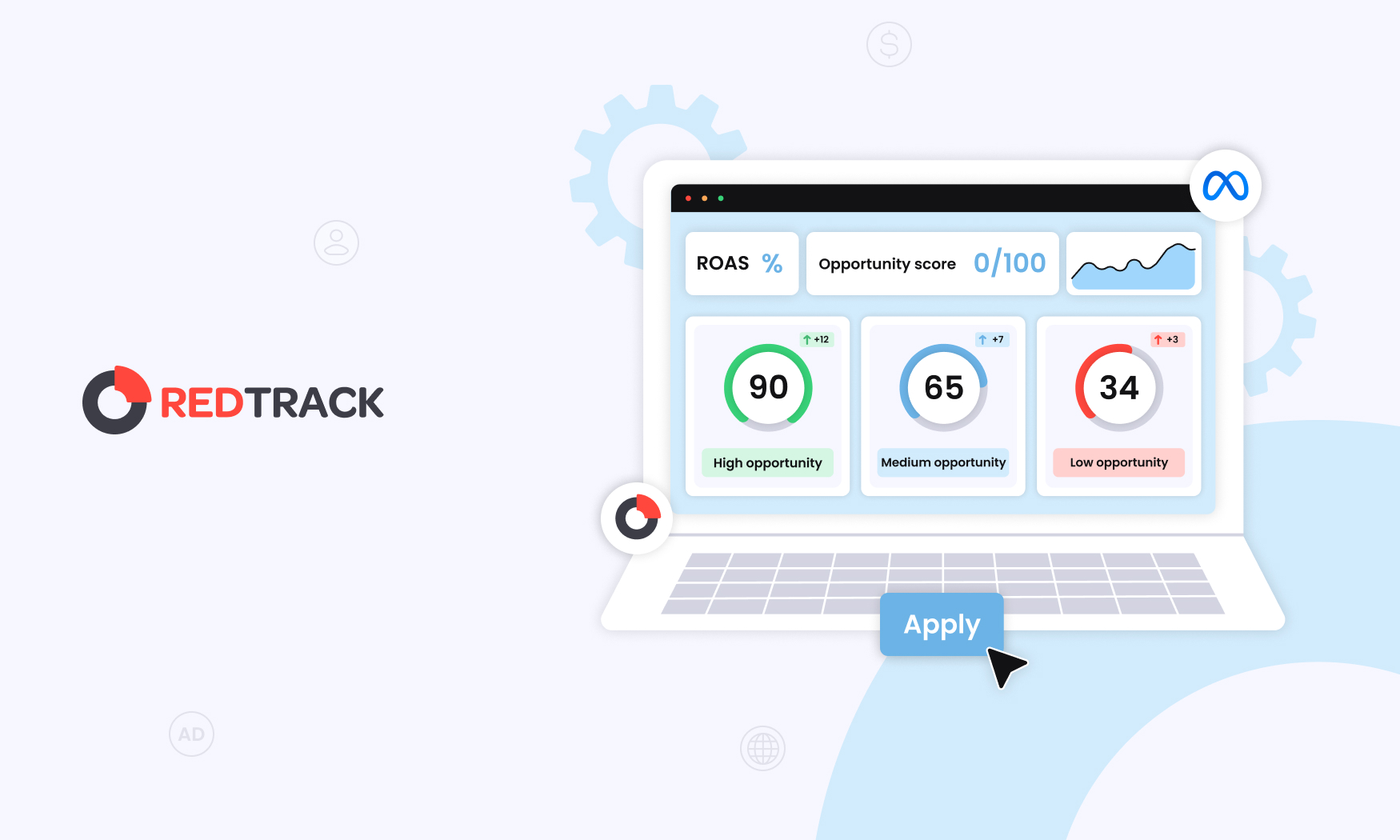
At its core, RedTrack is a tracking and attribution layer that sits between your traffic sources and your offers or landing pages. Instead of trusting platform-reported numbers alone, you route clicks through RedTrack, capture conversion events, and reconcile performance in one place.
Key capabilities commonly associated with the platform include:
- Click and conversion tracking across multiple traffic channels, so you can compare sources on the same measurement standard.
- Postback and pixel-based conversion capture, which lets networks and affiliate platforms send conversion signals back to your tracker.
- Real-time KPI dashboards covering impressions, clicks, conversions, and cost/revenue metrics.
- Cookieless tracking approach, which matters as browser restrictions reduce the reliability of third-party cookie-based measurement.
- Multi-channel reporting, useful when you run traffic from several sources and need one source of truth.
If you are new to the discipline behind these tools, our media buying guide covers how tracking fits into the broader campaign workflow.
Why Cookieless Tracking Matters in 2026
RedTrack.io Explained: Cookieless Ad Tracking for Media Buyers - Why Cookieless Tracking Matters in 2026.
Third-party cookies have been eroded by browser privacy changes, consent requirements, and platform-level restrictions. For media buyers, the practical consequence is that platform dashboards and cookie-based attribution often disagree — sometimes significantly.
A cookieless tracker addresses this by relying on first-party signals, server-side events, and postback mechanisms rather than a shared browser cookie. That does not make attribution perfect, but it makes it more durable and more comparable across channels.
For a broader look at how ad platforms handle measurement and bidding, see our Google Ads explainer.
How RedTrack Fits Into a Media Buying Stack
RedTrack.io Explained: Cookieless Ad Tracking for Media Buyers - How RedTrack Fits Into a Media Buying Stack.
A typical setup has four layers:
- Traffic source — the ad platform sending clicks (social, native, search, push, and so on).
- Tracker — RedTrack, which records the click, assigns a unique identifier, and listens for conversions.
- Landing page or offer — where the user converts.
- Conversion source — the network, store, or backend that fires the conversion event back to the tracker.
When all four layers are connected, you can answer questions like:
- Which creative produced the cheapest converting click this week?
- Which traffic source is inflating conversions compared to my backend numbers?
- Which campaign should be scaled and which should be cut?
Without a tracker, those answers usually come from guesswork or from a single platform's self-reported data.
RedTrack vs Ad Spy Tools: Different Jobs
A common point of confusion is treating tracking software and ad intelligence software as substitutes. They are not.
| Tool type | Primary job | Typical output |
|---|---|---|
| Ad tracker (e.g., RedTrack) | Measure your own campaigns | Clicks, conversions, cost, revenue, ROI |
| Ad spy / ad intelligence (e.g., PrimeSpy) | Research the market | Competitor creatives, ad metrics, product trends |
Tracking tells you how your campaigns perform. Ad intelligence tells you what is already working in the market before you spend. The strongest workflows use both: research to choose what to test, tracking to decide what to scale.
For example, a dropshipper might use PrimeSpy to find validated winning ads on Facebook and TikTok, then run their own version through RedTrack to measure true cost per acquisition. If you want a deeper comparison of ad intelligence options, our PrimeSpy vs GetHookd vs Adplexity Social breakdown covers coverage, workflow, and pricing differences.
Practical Example: From Ad Research to Tracked Campaign
Here is a simplified workflow that connects both sides:
- Research — Use an ad spy tool to search by keyword, URL, or advertiser and filter for ads with strong engagement or longevity signals.
- Validate demand — Cross-check the product or offer against store-level or sales data where available. Our PrimeSpy and PPSPY workflow walks through this validation step.
- Build the campaign — Create landing pages and creatives based on the angle you found, not a copy of it.
- Track it — Route traffic through RedTrack, connect postbacks, and set up your cost data.
- Decide — Use tracker-reported ROI to cut, iterate, or scale.
Step 5 is where most media buyers either win or waste budget. Research narrows the field; tracking picks the winner.
Who Should Use RedTrack.io
RedTrack tends to fit best for:
- Affiliate and performance media buyers running multiple traffic sources who need one reporting layer.
- Teams with meaningful ad spend where measurement errors translate into real money lost.
- Buyers working across networks who need standardized conversion reporting.
It is less essential for very small advertisers running a single channel with modest spend, where native platform reporting may be sufficient at first.
Limitations to Keep in Mind
- Tracking is not strategy. A tracker shows what happened; it does not tell you which creative angle to test next.
- Setup complexity. Postbacks, cost integrations, and attribution windows require careful configuration.
- Data quality depends on inputs. If conversion events are misconfigured, reports will be confidently wrong.
This is exactly why pairing tracking with market research matters. Tools like PrimeSpy are designed to surface winning ad patterns and product trends across Facebook, TikTok, and Meta Ad Library, so your testing pipeline starts from observed demand rather than a blank page. You can compare how it stacks up against other research tools in our PrimeSpy vs Dropispy vs Vibemyad comparison.
Sources and further reading
- RedTrack | Cookieless ad tracking solution for media-buyers - RedTrack.io offers real-time access to your media buying KPIs/data: ad tracking, impressions, clicks, conversions across multiple channels & 30 data points.
- Login | RedTrack.io - apb_post_viewed_10157Pending
- RedTrack | Cookieless ad tracking solution for media-buyers - RedTrack.io offers real-time access to your media buying KPIs/data: ad tracking, impressions, clicks, conversions across multiple channels & 30 data points.
FAQ
Is RedTrack.io free?
RedTrack offers tiered plans; pricing and trial terms change over time, so check the official site for current details.
Does RedTrack replace Google Analytics?
Not exactly. RedTrack focuses on paid media tracking and attribution for media buyers, while analytics platforms focus on broader site behavior. Many teams run both.
What does "cookieless" mean in this context?
It means the tracking method does not rely primarily on third-party browser cookies, instead using first-party and server-side signals to attribute conversions.
Can I use RedTrack and an ad spy tool together?
Yes, and it is a common combination. Use ad intelligence to find and validate angles, then use tracking to measure your own campaign performance.
Do I need a tracker if I only run one ad platform?
Not always. If your spend is small and you trust platform reporting, you can start without one. As spend grows, independent tracking usually becomes worthwhile.
Conclusion
RedTrack.io solves a specific, high-value problem: measuring paid media performance across channels without depending on third-party cookies. It is a measurement layer, not a research layer.
If your bottleneck is knowing which campaigns convert, a tracker like RedTrack is the answer. If your bottleneck is knowing what to test in the first place, ad intelligence tools such as PrimeSpy fill that gap by showing what is already working across Facebook, TikTok, and the Meta Ad Library. Most serious media buyers eventually need both — research to choose, tracking to decide.