
RedTrack Review: Cookieless Ad Tracking & Attribution for Performance Marketers
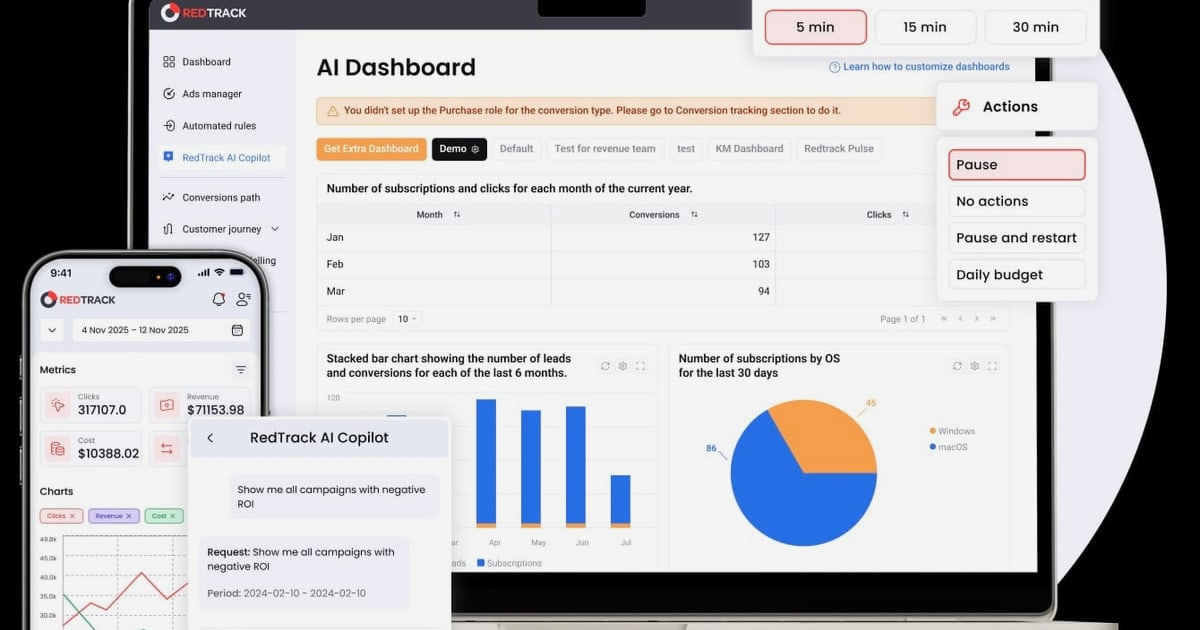
 Figure: RedTrack unifies cross-channel data in a single analytics workspace.
Most media buyers live in a world of fragmented data. Google Ads says one thing, Meta’s pixel reports another, and your affiliate network shows a third set of numbers. On top of that, ad blockers and browser privacy updates swallow up to 30–50% of conversions, making pixel-based tracking increasingly unreliable. RedTrack tackles this head-on with a cookieless, server-side platform purpose-built for affiliates, media buyers, and DTC brands.
At PrimeSpy, we cut through the noise to bring you transparent, evidence-based software reviews. This RedTrack review examines what the tool actually does, where it shines, and where it stumbles—so you can decide if it’s the right fit for your paid acquisition stack.
What Is RedTrack and Who Is It For?
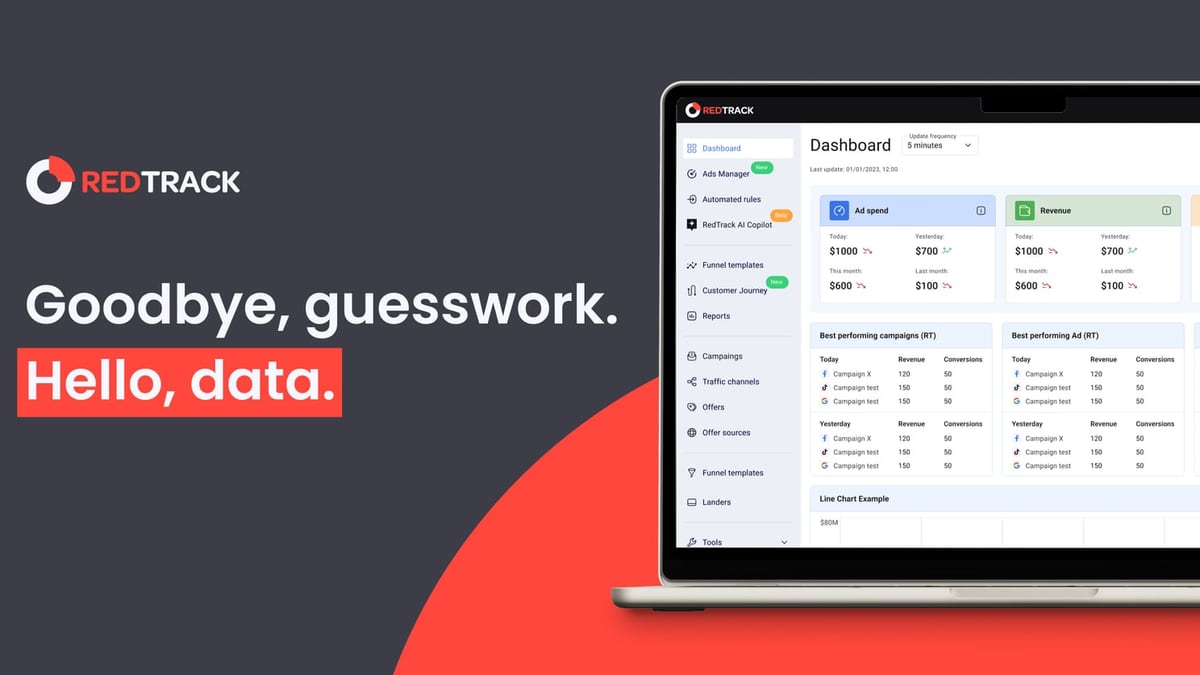
RedTrack Review 2025: Cookieless Ad Tracking for Media Buyers product interface and feature overview.
RedTrack is a unified ad tracking, attribution, and media buying automation platform. Instead of relying on browser cookies, it collects first-party data through server-side tracking. That means every click and conversion is counted on your own infrastructure, not at the mercy of a browser’s privacy settings.
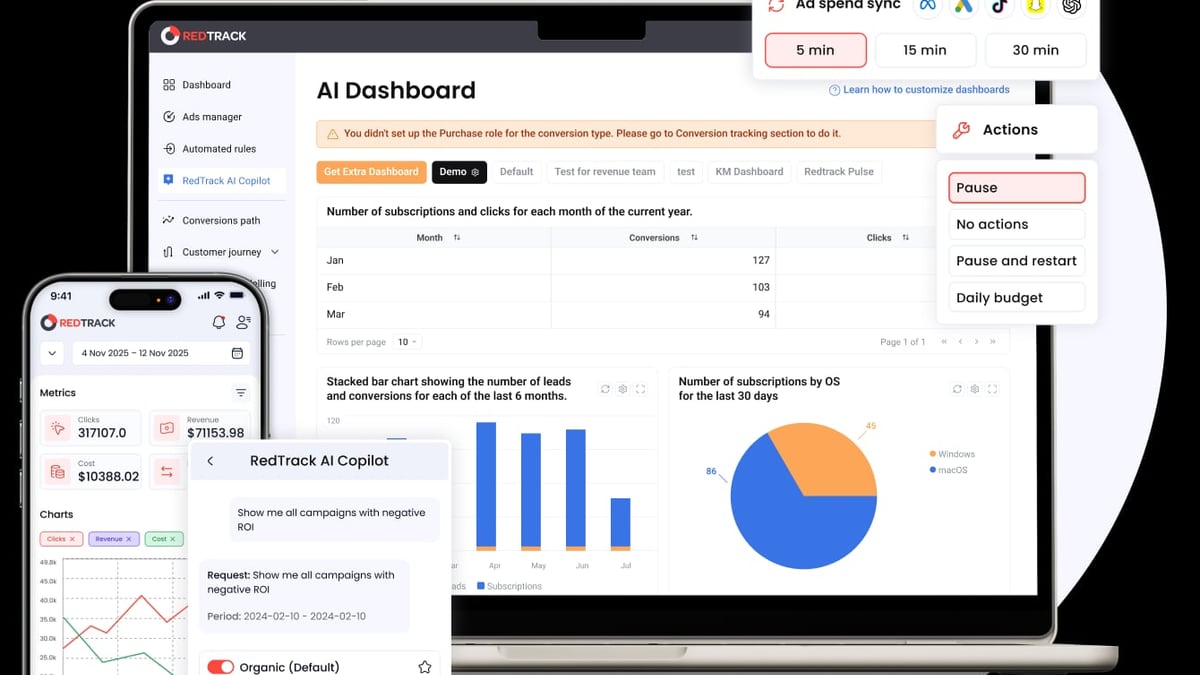
The platform pulls in ad spend data every 5–30 minutes from Google, Meta, TikTok, native networks and more. It then applies the same multi-touch attribution model across all channels, so you can finally compare performance apples-to-apples.
Ideal Users
- Affiliate marketers managing dozens of campaigns across multiple traffic sources.
- Media buyers who need real-time ROI data to scale winning and pause losing ads.
- DTC ecommerce brands spending heavily on paid social and search, and wanting to recover lost attribution.
- Agencies that require multi-client dashboards and conversion API (CAPI) management at scale.
If you’re already comfortable with tracking pixels but frustrated by data conflicts, RedTrack’s cookieless architecture offers a modern alternative. Beginners can also use it, but expect a learning curve—more on that later.
Core Feature Deep Dive
1. Server-Side Click & Conversion Collection
Instead of a pixel, RedTrack places a tracking script on your server or uses direct API integrations. This captures every click and conversion independently. The result: a consistent source of truth that doesn’t vanish when a user’s browser blocks cookies. According to RedTrack’s official site, this approach restores 30–50% of conversions that traditional pixel-based systems lose.
2. Unified Multi-Touch Attribution
RedTrack enforces one attribution model (first-click, last-click, linear, or custom) across all connected ad platforms. That means you can compare a Facebook ad’s performance directly against a Google Ads campaign or an email promotion—without manually adjusting figures. The platform logs the full conversion path, and you can drill down to see every touchpoint.
3. CAPI Signal Feedback
RedTrack doesn’t just record conversions; it sends them back to ad platforms via Conversion API. When Meta’s or Google’s bidding algorithm receives server-side, verified conversion events, it can optimize more accurately. This creates a tight feedback loop: collect clean data, attribute it, then feed that signal back to improve automated bidding.
4. Analytics & Reporting
Unified dashboards show cross-channel spend, revenue, ROAS, and CPA in real time. Because the underlying data is raw, you can open any number and trace it back to the exact click or conversion record. This transparency is a big shift from "trust the platform's report" to "verify every metric."
5. Automation Rules
RedTrack lets you create automated rules based on attribution metrics—like pausing campaigns when CPA exceeds a threshold or scaling budgets when ROAS stays above a target. Since all figures derive from the same data foundation, these rules act on numbers you can trust, reducing the risk of automated decisions based on incorrect stats.
6. AI Copilot
A conversational AI assistant helps you build reports, troubleshoot setup issues, and surface insights. You can ask questions like "show me campaigns with declining ROAS over the last 7 days" and get answers directly. While it won’t replace a human media buyer, it speeds up routine analysis.
What Users Say: Trustpilot & Reddit Feedback
Real-world feedback paints a fairly positive picture, with some recurring gripes.
On Trustpilot, users frequently praise the easy-to-understand user interface and responsive Telegram support. One typical review states: "We are using RedTrack almost a year now, it's a really good tracker, User interface is easy to understand." The aggregate rating reflects general satisfaction, though some note that advanced features require time to master.
On Reddit, a PPC professional shared: "I use RedTrack now for multi-channel media buying tracking and as a go-to solution..." They compared it favorably to Dreamdata for media buying use cases, highlighting RedTrack’s focus on affiliate and performance channels rather than B2B analytics. However, others cautioned that RedTrack works best when you’re willing to set up the tracking infrastructure properly—it’s not an out-of-the-box solution for complete beginners.
Strengths: Where RedTrack Excels
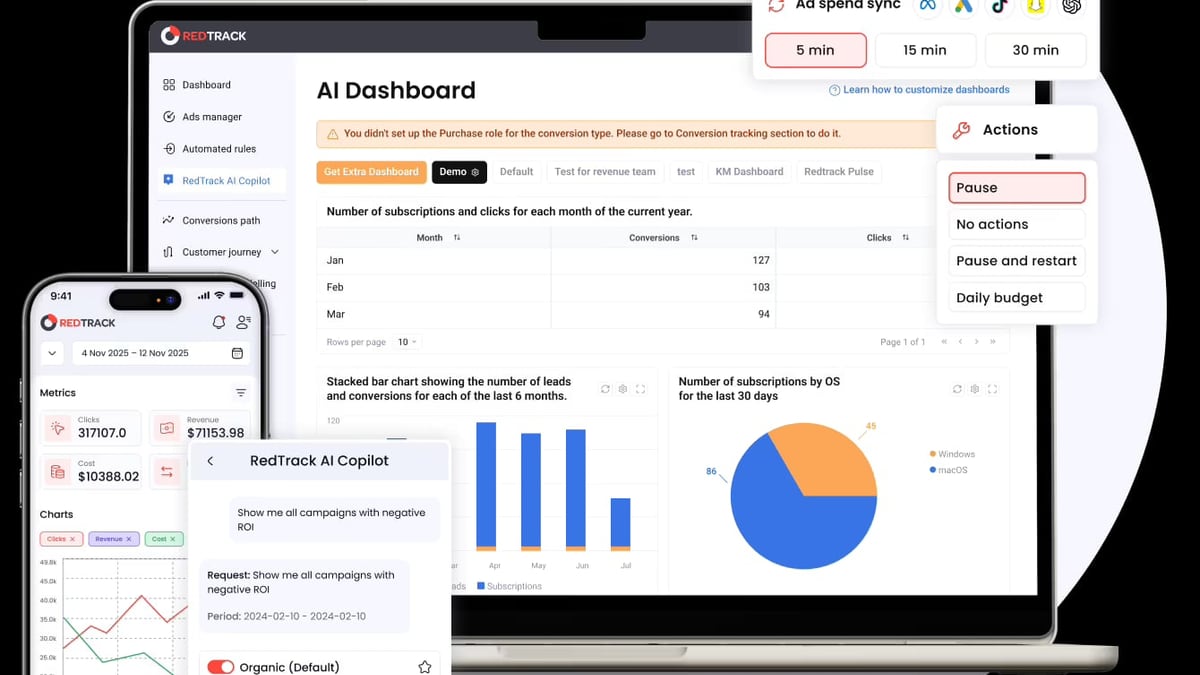
RedTrack Review 2025: Cookieless Ad Tracking for Media Buyers product interface and feature overview.
- Cookieless data integrity. Server-side tracking means you own the data, avoiding the gap left by ad blockers and ITP restrictions.
- Truly cross-channel attribution. By applying a single attribution logic everywhere, you can compare channels without bias.
- Real-time cost sync. With spend updates every 5–30 minutes, you can make near-instant budget decisions.
- CAPI integration depth. Sending server-side events back to Meta, Google, TikTok, etc., improves campaign performance directly.
- Scalable automation. Rule-based optimization runs on trustworthy numbers, reducing manual work and reaction time.
- AI assistance. Even basic AI Copilot functions can speed up routine reporting and anomaly detection.
Limitations and Considerations
- Setup complexity. Server-side tracking isn’t plug-and-play; you’ll need to configure DNS, scripts, or API endpoints. This can overwhelm beginners or small teams without dev support.
- No built-in landing page builder. Unlike some affiliate-focused trackers, RedTrack doesn’t offer a native landing page builder; you must integrate external builder tools.
- Pricing transparency. RedTrack doesn’t publish exact pricing upfront—you’ll need to contact sales or start a free trial to see plan details. This can be a hurdle for solo affiliates on a tight budget.
- Learning curve for advanced features. While the interface is generally intuitive, mastering multi-touch attribution models, rule logic, and custom reports takes time.
- Limited B2B use cases. RedTrack’s strength is performance marketing; companies needing account-based analytics or long B2B sales cycles may find it less suitable than platforms like Dreamdata.
Pricing Signals and Plans
RedTrack operates on a subscription model, with plans typically starting around $99 per month for the "Starter" tier. The "Growth" plan often lands near $199/month, unlocking additional features such as advanced automation and API access. Agency plans and enterprise solutions require a direct conversation with sales. All tiers include a free trial so you can test the platform with your own data before committing.
If you’re spending over $10k/month on ads, a paid RedTrack plan usually pays for itself by recovering otherwise lost conversions and reducing wasted ad spend through accurate attribution.
Setup Experience and Learning Curve
Onboarding begins by adding a tracking domain and placing a RedTrack-provided script on your server or integrating via API. You then connect ad accounts, define attribution models, and set up conversion events. RedTrack’s support team offers guided setup calls, which users on Trustpilot describe as helpful and responsive.
For those new to server-side tracking, we recommend starting with a single traffic source, then gradually expanding. Our affiliate tracker setup guide walks through the initial configuration common to platforms like RedTrack. Once live, the dashboard populates quickly, and you can begin comparing channel performance within minutes.
How RedTrack Compares to Alternatives
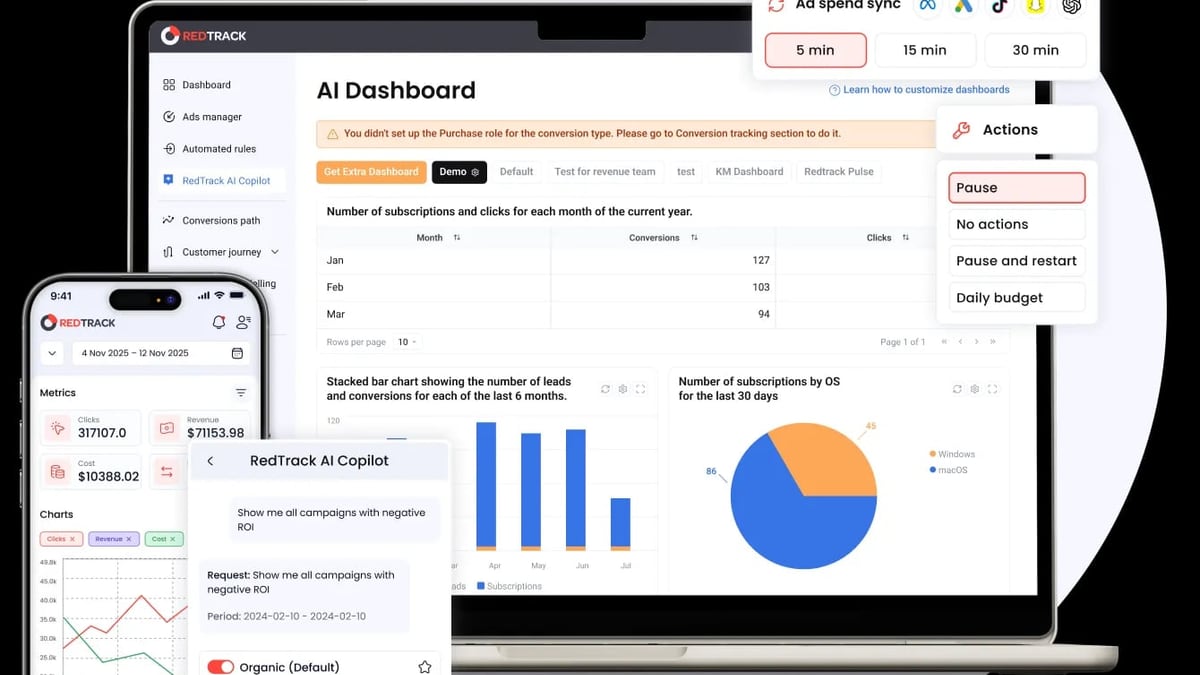
RedTrack Review 2025: Cookieless Ad Tracking for Media Buyers product interface and feature overview.
 Figure: RedTrack versus other tracking solutions across key criteria.
- RedTrack vs Voluum: Voluum is a long-standing favorite among affiliates, with an all-in-one tracker and landing page builder. RedTrack’s edge lies in cookieless architecture, CAPI orchestration, and cross-channel attribution logic. Voluum might be easier for absolute beginners, but RedTrack delivers more robust data integrity for advanced media buyers.
- RedTrack vs Dreamdata: Dreamdata focuses on B2B revenue attribution with account-level insights. RedTrack is squarely for performance marketers running paid acquisition. Choose RedTrack for DTC/ecommerce/affiliate campaigns; pick Dreamdata for B2B pipeline analytics.
- RedTrack vs Everflow: Everflow excels in partnership and affiliate network tracking. RedTrack competes directly as a media buyer tool with stronger automation and AI features. Everflow offers a similar pricing range, but RedTrack’s real-time cost sync and CAPI signaling give it a performance edge.
For a broader look at the ecosystem, see our comparison of top affiliate tracking platforms.
Decision Criteria: Is RedTrack Right for You?
RedTrack Review 2025: Cookieless Ad Tracking for Media Buyers product interface and feature overview.
RedTrack is a strong fit if you:
- Run multi-channel paid campaigns and need unified attribution.
- Lose visibility to ad blockers or browser restrictions.
- Want to feed accurate conversion signals back to Meta, Google, or TikTok via CAPI.
- Have the technical resources (or support) to implement server-side tracking.
- Scale media buying operations and benefit from automated rules.
You may want to look elsewhere if:
- You’re a complete beginner with no technical help and just need basic pixel tracking.
- You require an integrated landing page builder.
- Your business is B2B with long, multi-stakeholder sales cycles.
- You need a fully self-serve free plan or very low-cost starter tier.
If you’re still evaluating options, our ad tracking platforms guide can help you shortlist the best tool for your budget and use case.
FAQ
What is RedTrack used for?
RedTrack is a cookieless ad tracking and attribution software. It collects server-side conversion data, applies a consistent attribution model across channels, feeds conversion signals back to ad platforms via CAPI, and automates media buying optimization.
How does RedTrack handle cookieless tracking?
It uses first-party, server-side data collection instead of browser cookies. This makes tracking resilient against ITP, ad blockers, and other privacy features that block traditional pixels.
Is RedTrack suitable for beginners?
The user interface is relatively intuitive, but the initial server-side setup requires technical know-how. True beginners may need support or should start with simpler pixel-based trackers, then upgrade once they outgrow them.
Does RedTrack offer a free plan?
No, but a free trial is available. Paid plans start around $99/month. You can test drive the full platform before buying.
Can RedTrack replace Google Analytics?
It can replace parts of GA for paid acquisition attribution, but it’s not a general web analytics tool. RedTrack focuses on ad performance, ROI, and conversion tracking. Many users run it alongside GA for holistic site data.
How does RedTrack improve ad platform bidding?
By sending verified server-side conversion events to ad platforms via Conversion API, RedTrack feeds accurate data into Google/Meta/TikTok algorithms. This helps the platforms optimize for real results rather than incomplete pixel data, often improving campaign performance.
Final Verdict
RedTrack succeeds in its mission to restore data clarity for media buyers and affiliates. The cookieless foundation, real-time cost sync, deep CAPI integrations, and unified attribution make it a compelling tool for anyone serious about paid acquisition. The main trade-offs are a steeper setup curve and the lack of built-in landing page tools. If you’re ready to invest in server-side accuracy and want to take control of your conversion data, RedTrack is worth a thorough test drive through the free trial.