
How to Use Minea: A Practical 2026 Walkthrough
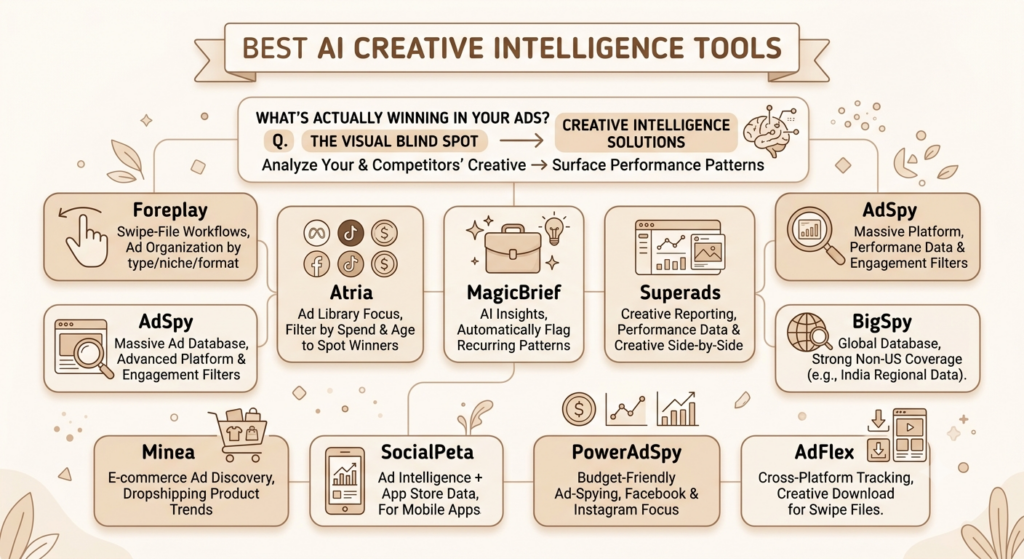
Minea is a product research and ad spy platform built mainly for dropshippers and ecommerce sellers. It bundles a searchable ad library (AdSpy), a Shopify store analyzer (Shop Spy), and daily product lists into one subscription. If you have just signed up and are staring at the dashboard wondering where to click first, this walkthrough covers the actual workflow: what to filter, what to ignore, and how to turn a search result into a product you can test.
What Minea Actually Does
How to Use Minea: A Practical 2026 Walkthrough - What Minea Actually Does.
Before touching filters, it helps to understand the three core surfaces inside the tool, because they answer different questions.
- AdSpy — searches live and recent ads across Facebook and TikTok. Use it to see what competitors are running, how long ads have been live, and which creatives keep getting reused.
- Shop Spy — analyzes Shopify stores: product catalogs, estimated revenue, pricing, and the tech stack behind the store. Use it to understand who is selling and what they sell.
- Daily lists and product feeds — curated drops of trending and newly spotted products. Useful as a starting point when you have no niche in mind yet.
A common mistake is treating these as one tool. They are complementary: Shop Spy tells you a store exists and is active, AdSpy tells you how that store is actually advertising. You need both signals before a product is worth testing.
Step 1: Set Up Your Account and Pick a Plan Level
How to Use Minea: A Practical 2026 Walkthrough - Step 1: Set Up Your Account and Pick a Plan Level.
Minea's entry tier (historically around $49/month for the Starter plan) unlocks the core research features. Higher tiers add more searches, more results per query, and additional store data. If you are only validating one or two products a week, the entry tier is usually enough; if you are running a research-heavy operation across multiple niches, the search limits matter more than the feature list.
Practical setup tips:
- Disable your ad blocker. Shop Spy reads store data that ad blockers frequently interfere with.
- Set your target country first. Ad libraries and store databases are heavily geo-dependent, and results from the wrong market will waste your time.
- Keep a spreadsheet open. Minea gives you data, not decisions — you will want a place to log product names, prices, ad longevity, and your notes.
If you are still deciding whether Minea is the right tool versus other ad spy platforms, a side-by-side comparison is worth doing before you commit to a monthly plan. See our breakdown of PrimeSpy vs Minea vs GetHookd for how coverage, search, and pricing differ in 2026.
Step 2: Use the Daily Lists as a Starting Point, Not a Shortcut
How to Use Minea: A Practical 2026 Walkthrough - Step 2: Use the Daily Lists as a Starting Point, Not a Shortcut.
The daily product lists are the fastest way to see what is moving right now. They surface products that have recently appeared across many stores or have seen a spike in advertising activity.
How to use them well:
- Scan for categories you can actually source and ship — not just what looks interesting.
- Note the date a product first appeared. Products that have been on the list for weeks are already saturated; products that appeared in the last few days are earlier but riskier.
- Cross-check every candidate in AdSpy before you get excited. A product on a daily list with no active ads behind it is a weak signal.
The daily list is a filter for your attention, not a validated winner. Treat it as a shortlist to investigate.
Step 3: Run an AdSpy Search That Actually Narrows Down
The most common failure mode with any ad spy tool is searching too broadly and drowning in results. Minea's AdSpy supports keyword, advertiser, and filter-based searches, and the filters are where the real work happens.
A workable filter set for a first pass:
- Platform: Facebook or TikTok, whichever matches where you plan to advertise.
- Date range: Last 30 days. Older ads tell you what worked, not what is working.
- Media type: Video, if you plan to run video. This alone removes a large share of noise.
- Ad longevity: Look for ads running 30+ days. Long-running ads are the closest thing to proof of profitability you will get from a spy tool.
- Engagement: Sort by likes, shares, or comments to surface creatives that resonated, not just creatives that spent.
When you open an individual ad, extract three things: the hook (first three seconds of the video or the headline), the angle (benefit, fear, curiosity, social proof), and the format (UGC testimonial, demo, before/after). Do not copy the creative. Copy the structure and rebuild it with your own footage.
One caveat worth stating plainly: ad longevity is a proxy, not a guarantee. A competitor can run an unprofitable ad for a month while testing, and a profitable ad can be paused for reasons unrelated to performance. Use longevity as one signal among several.
Step 4: Use Shop Spy to Understand the Store Behind the Ad
Ads tell you what is being promoted. Shop Spy tells you whether the store behind those ads is a real operation or a test that will disappear next week.
Typical Shop Spy workflow:
- Filter stores by country, active status, and ad activity. Stores currently running ads are spending money, which is a stronger signal than stores that merely exist.
- Open a store and look at its product catalog. Sort by estimated orders if available.
- Check pricing and product freshness. Products listed 30+ days with steady order estimates are more proven than products listed last week.
- Look at duplication. If dozens of stores sell the identical product, you are either looking at validated demand or a saturated market — usually both. Products with meaningful order volume but moderate duplication are the more interesting middle ground.
- Check the store's active ads to connect the product to the creative strategy.
Revenue estimates inside any store-analysis tool are just that — estimates. They are modeled from traffic, ad activity, and catalog signals, not from the store's actual books. Use them for ranking stores against each other, not as a forecast of what you will earn.
If you are new to the model itself and want the underlying mechanics before diving deeper into research, our dropship explained guide covers how sourcing, margins, and ad costs fit together.
Step 5: Validate the Product Before You Spend
Finding a product is the easy part. Validation is where most beginners skip steps and lose money. A simple checklist:
- Supplier check: Can you source the product at roughly 25–40% of the target retail price? If not, the margin will not survive ad costs.
- Shipping time: Know it, and disclose it. Long shipping times drive chargebacks if you hide them.
- Supplier reliability: Look for established suppliers with strong ratings and recent order volume.
- Margin math: Retail price minus product cost, shipping, payment processing, and an assumed cost per acquisition. If the result is thin, the product needs unusually cheap traffic to work.
- Market demand, not single-store demand: A product selling well on one store might be that store's brand strength, not the product. Check whether multiple stores are running ads for the same or similar products.
This is the step where a second data source helps. Cross-checking a candidate across more than one ad library — for example, comparing what you find in Minea against what a multi-platform tool like PrimeSpy surfaces across Facebook, TikTok, and the Meta Ad Library — reduces the chance that you are looking at an isolated spike rather than a trend. PrimeSpy's smart search by keyword, URL, or advertiser and its duplication and spend metrics are built for exactly this cross-check, and it offers a free trial with 500 credits if you want to test the workflow before paying for a second subscription.
Step 6: Turn Research Into a Test Plan
Research without a test plan is entertainment. Once you have two or three validated candidates, define the test before you build anything:
- One product per test, one core angle per ad set.
- A small daily budget you are genuinely willing to lose.
- A decision rule written down in advance: kill, iterate, or scale, based on a specific cost-per-purchase threshold and a specific number of days.
- A creative plan that reuses the structure you observed, not the competitor's assets.
If you also run paid traffic at any volume, it is worth understanding how your tracking and attribution layer will report on these tests. Our guide to attribution software explains why platform-reported conversions and your actual incremental results can diverge, which matters when you are deciding whether a product test succeeded.
Common Mistakes When Learning Minea
- Searching without filters. Broad searches produce impressive-looking result counts and almost no usable signal.
- Copying creatives exactly. It invites takedowns, looks lazy to audiences, and gives you no defensible angle.
- Trusting revenue estimates as facts. They are directional rankings, not financial statements.
- Chasing the highest-revenue stores. Established brands are hard to reverse-engineer. Mid-sized stores running ads are usually more instructive.
- Skipping margin math. A trending product with a 15% margin is not a winning product, no matter how many ads it has.
- Treating one tool as the whole picture. No single ad library sees everything. Cross-checking is part of the job.
Related reading
- AdSpy Free Trial: What You Actually Get in 2026 - AdSpy doesn't offer a free trial. Compare real trial options, pricing, and features, and see how PrimeSpy's 500 free credits stack up in 2026.
Sources and further reading
- Minea Tutorial (2025) - Find Winning Dropshipping Products - The Best Product Research Tool 🔎Minea⛏️ Use code ELLIOTT20 for 20 % OFF: https://app.minea.com/ads/facebook?ref=byak2Learn the ins and outs of finding winni...
- How to Use Minea Shop Spy to Find Winning Products (2026) - Learn to use Minea Shop Spy to analyze winning dropshipping stores, find top products, and validate demand before investing in 2026.
- Minea Tutorial 2026 - How to Find Winning Products using Minea - Minea Tutorial 2026 - How to Find Winning Products using MineaIn this video, we will show you step by step how to find winning products using minea product r...
FAQ
Is Minea good for beginners?
Yes, for the research stage. The daily lists and guided store views lower the barrier to entry. The risk is that beginners treat the outputs as validated winners rather than as leads that still need margin and demand checks.
What is the difference between Minea AdSpy and Shop Spy?
AdSpy focuses on individual ads — creatives, copy, platforms, and how long they have been running. Shop Spy focuses on stores — catalogs, pricing, estimated performance, and the products a store sells. They answer different questions and work best together.
How accurate are Minea's revenue estimates?
Treat them as modeled estimates, not reported figures. They are useful for ranking stores relative to each other. They should never be the sole basis for a product decision.
Do I need the highest Minea plan to find products?
No. The entry tier covers the core research workflow. Higher tiers mainly expand search volume and result depth, which matters more if you research at scale across many niches.
Can I find suppliers directly in Minea?
Minea connects products to supplier information where available, but you should still verify pricing, shipping times, and reliability directly on the supplier platform before committing.
How long does it take to find a winning product with Minea?
There is no fixed answer. A focused session can produce a shortlist in under an hour, but validation — supplier checks, margin math, and cross-referencing demand across ad libraries — is what determines whether a candidate is actually worth testing.
Should I use more than one ad spy tool?
If your budget allows, yes. Different tools index different platforms and surfaces, and cross-checking reduces the risk of building a campaign around a single misleading data point. Many researchers start with one tool and add a second once ad spend justifies it.
Conclusion
Learning how to use Minea is less about memorizing buttons and more about building a repeatable loop: surface candidates, filter aggressively, connect ads to stores, validate margins and demand, then test with a written decision rule. The tool gives you speed and visibility; the discipline is still yours. Start with one niche, one filter set, and one product candidate, and let the workflow prove itself before you scale your research volume.
For a broader look at how Minea stacks up against other ad spy platforms in 2026, see our PrimeSpy vs Dropispy vs Anstrex comparison.