
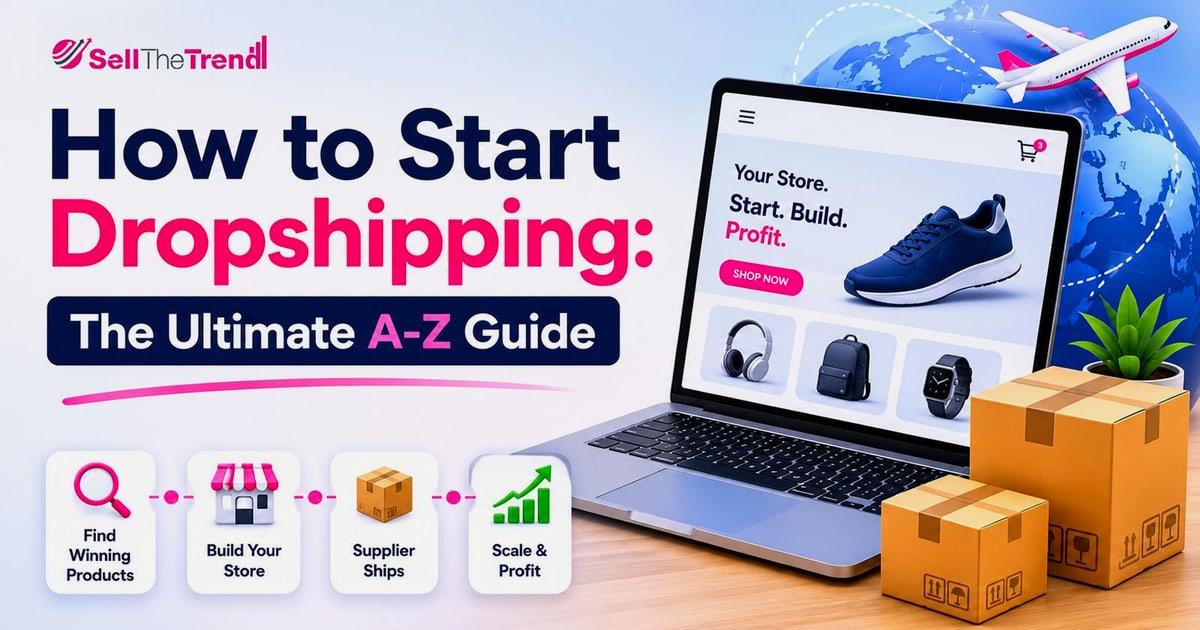
Dropshipping Explained: How It Works, Profits & Risks in 2026
Dropshipping is a retail fulfillment method where you sell products online without holding inventory. When a customer orders, you pass the order to a supplier who packs and ships it directly to the buyer. You handle marketing, pricing, and customer service; the supplier handles storage and logistics.
That sounds simple, and it is — which is exactly why the model is so crowded. Low barriers to entry mean thousands of sellers chase the same products with the same ad angles. This guide covers how dropshipping actually works, what it really costs, how to vet suppliers, and how to research products before you spend money on ads.
What Is Dropshipping?
Dropshipping is a form of retail business in which the seller accepts customer orders without keeping stock on hand. Instead, the seller transfers the order and shipment details to a manufacturer, wholesaler, another retailer, or a fulfillment house, which ships the goods directly to the customer.
The seller is responsible for marketing and selling the product but has limited control over product quality, storage, inventory management, or shipping. In exchange, the seller avoids the costs of warehouses, storefronts, purchasing inventory, and the staff needed to run those functions.
This is why dropshipping is often described as a low-investment business model. It is also why margins tend to be thinner and quality control weaker than in traditional retail.
How Dropshipping Works: The Fulfillment Process
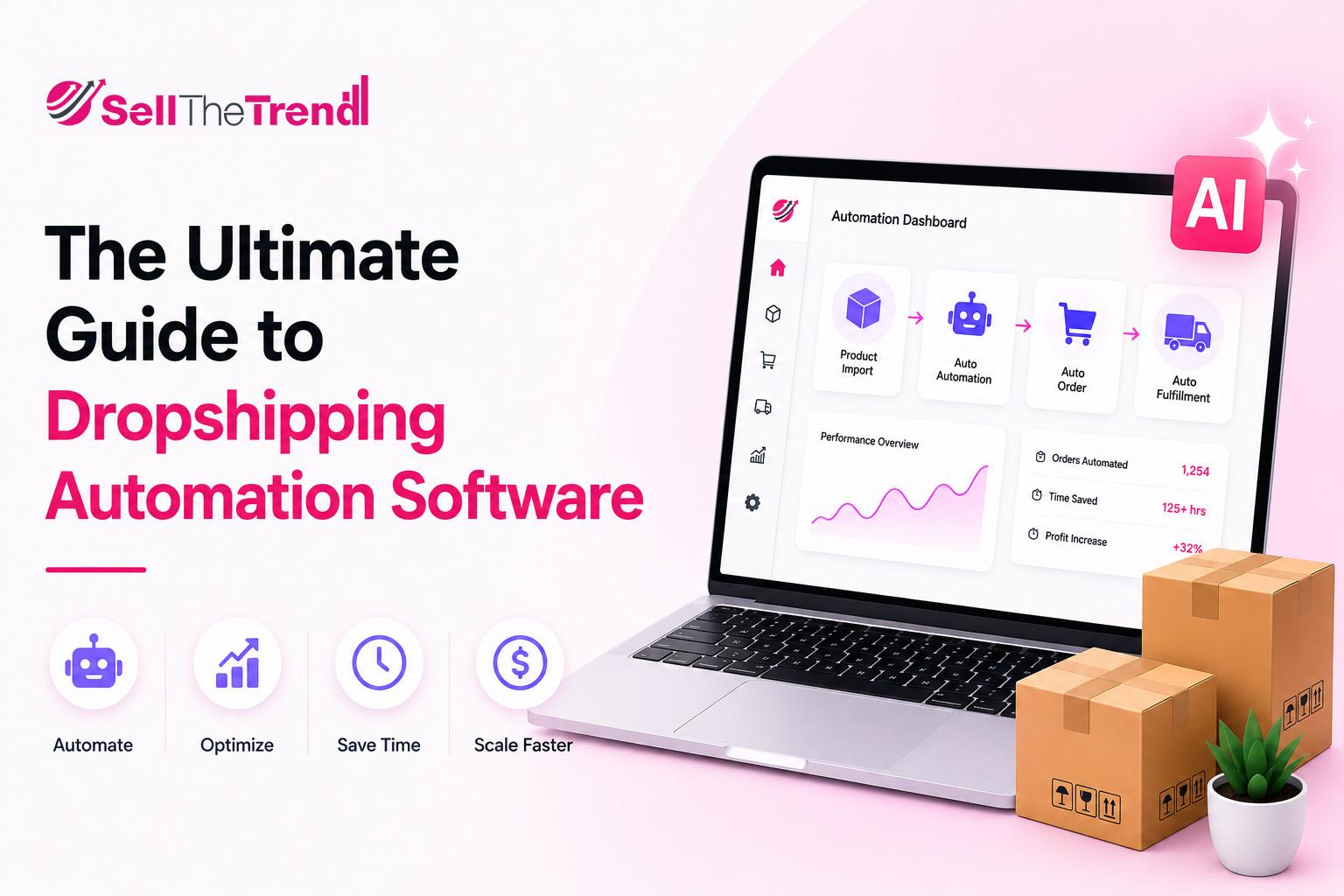
Dropshipping Explained: How It Works, Profits & Risks in 2026 - How Dropshipping Works: The Fulfillment Process.
The mechanics are consistent across most setups:
- You list products on your store, usually sourced from a supplier catalog or marketplace.
- A customer places an order and pays your retail price.
- You forward the order (often automatically through an app) to your supplier.
- The supplier picks, packs, and ships the item to the customer, ideally with your branding on the packaging.
- You handle customer service, order tracking, returns, and refunds.
You remain the seller of record. You set the price, record the revenue, and carry responsibility for sales tax and customer satisfaction — even though you never touch the product.
Common Dropshipping Business Models
Not all dropshipping looks the same. Three models dominate:
- Product reselling: You curate items from suppliers, often in a specific niche. Example: selling eco-friendly home goods sourced from a single supplier.
- Business extensions: You partner with an existing local retailer to expand their online reach. Example: selling a boutique's handmade crafts on your store.
- Product creation: You bundle existing products into a new offering. Example: assembling DIY craft kits from one supplier's catalog.
Bundling from a single supplier is a practical choice because it avoids split shipments and simplifies fulfillment.
Dropshipping Pros and Cons
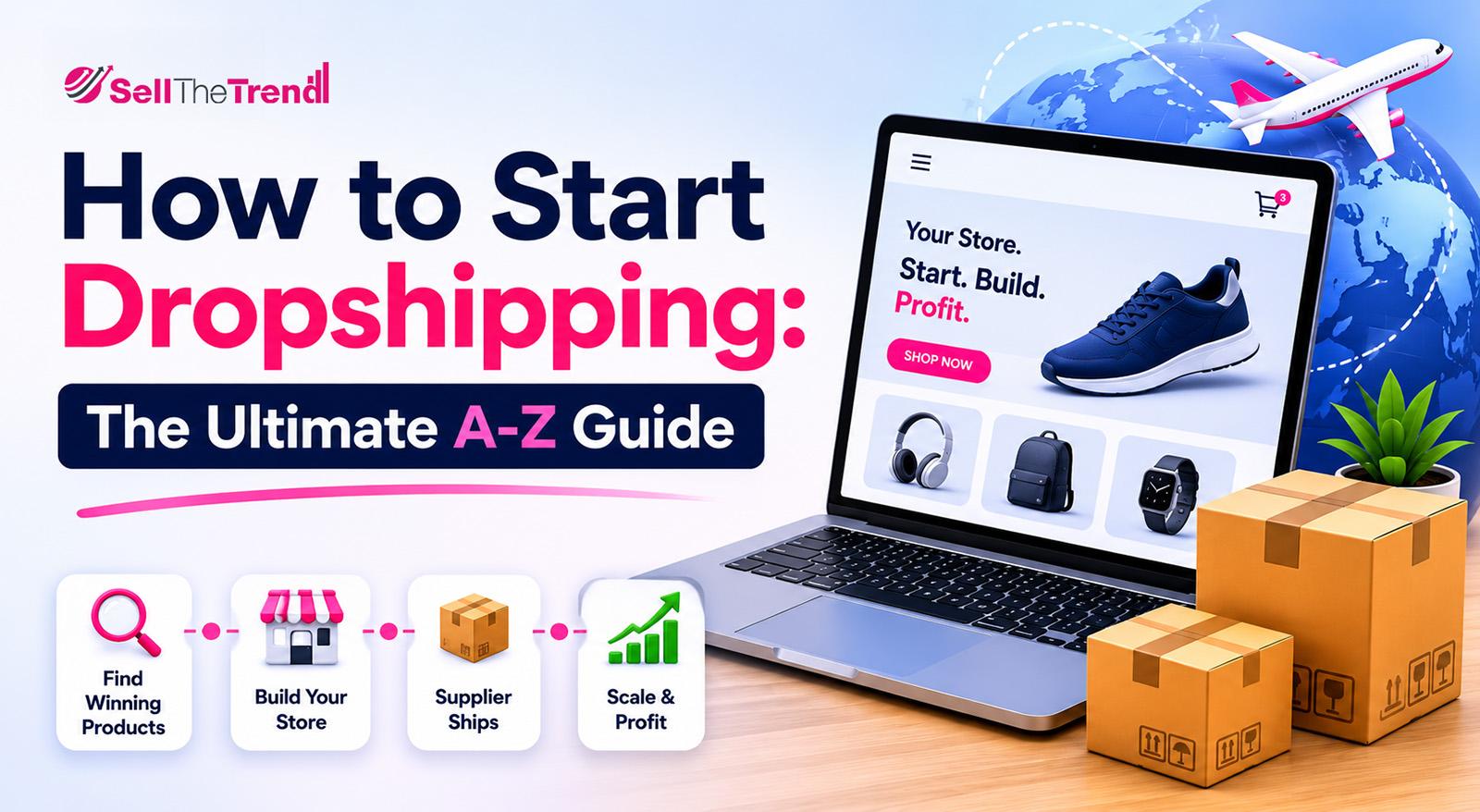
Dropshipping Explained: How It Works, Profits & Risks in 2026 - Dropshipping Pros and Cons.
Advantages
- Low startup costs: No need to buy inventory or rent storage.
- Low overhead: No warehouse staff, no pick-and-pack operation.
- Wide product range: You can list hundreds of SKUs without stocking any of them.
- Location independence: The business runs from anywhere with an internet connection.
- Easy to test: You can swap products and suppliers without writing off unsold stock.
Drawbacks
- Slim margins: Competition pushes prices down while ad costs stay high.
- Weak differentiation: The same product is often available from dozens of stores.
- Limited quality control: You cannot inspect what you never handle.
- Shipping risk: Delays and supply chain issues are outside your control but reflect on your brand.
- Reputational exposure: If a supplier ships the wrong item or packages it poorly, customers blame you.
Is Dropshipping Profitable?
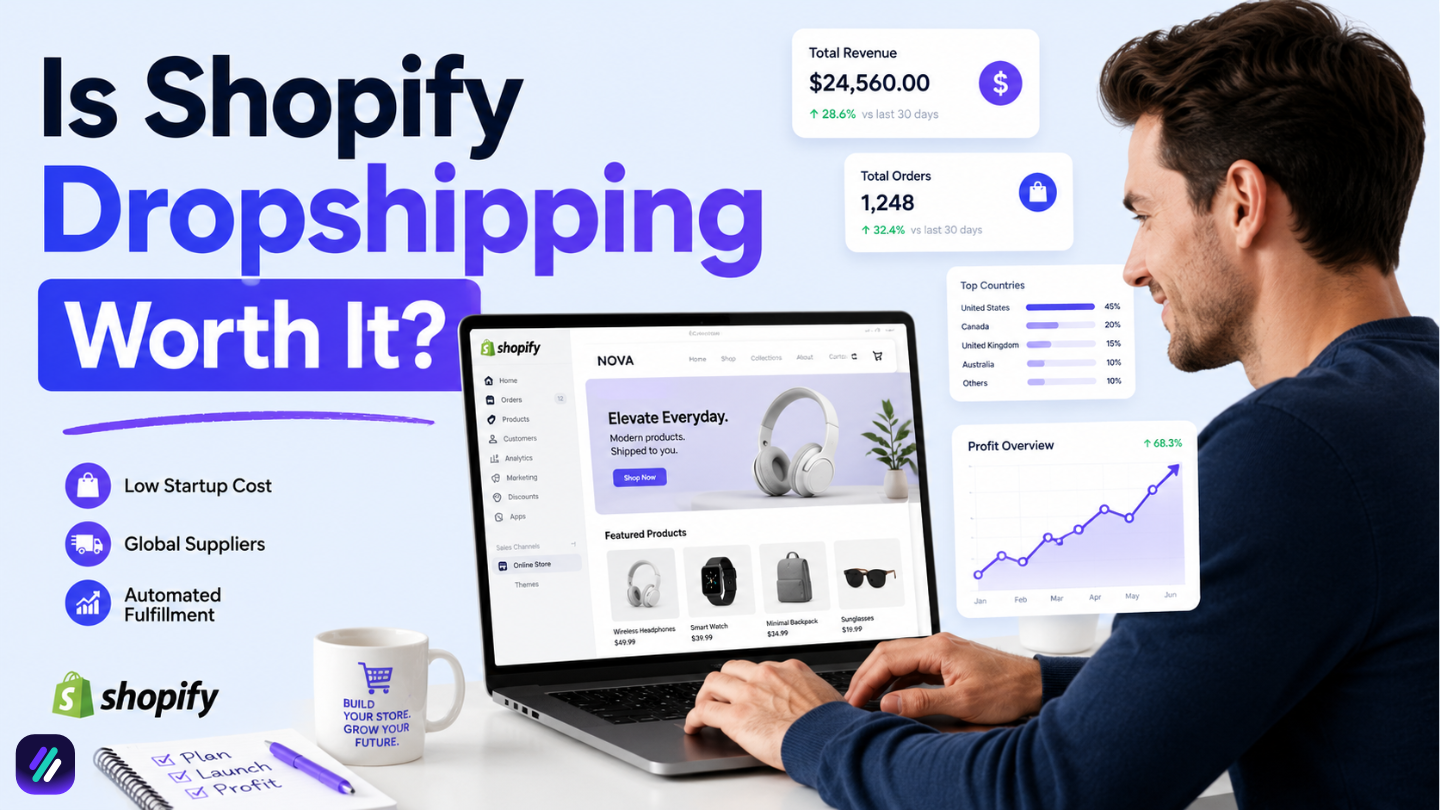
Dropshipping Explained: How It Works, Profits & Risks in 2026 - Is Dropshipping Profitable?.
It can be, but the math is unforgiving. Your profit is the difference between what the customer pays and what you pay the supplier, minus selling, merchant, and shipping fees — and minus advertising.
A simple example:
| Line item | Amount |
|---|---|
| Retail price | $39.99 |
| Supplier cost | $12.00 |
| Shipping | $4.00 |
| Payment processing (~3%) | $1.20 |
| Ad cost per purchase | $14.00 |
| Profit per order | $8.79 |
At that margin, a 10% return rate or a spike in ad costs can wipe out profitability. This is why successful dropshippers obsess over two things: product selection and creative testing.
Cost of goods matters most because the markup over wholesale price is your margin. Suppliers may charge a flat rate or a percentage of the sale price, which changes your numbers significantly. Marketing and advertising — social ads, influencer partnerships, search — typically consume the largest share of revenue.
How to Start a Dropshipping Business in 2026
First viewport screenshot of 8 Best Competitor Ad Tracking Platforms to Scale Performance in 2026 - PrimeSpy.
1. Pick a Niche and Product Direction
Specializing in a narrower niche lets you build expertise and target a defined audience with less direct competition. Broad general stores compete on price; focused stores compete on relevance.
2. Vet Suppliers Carefully
When evaluating suppliers:
- Avoid those charging monthly fees just to access a catalog.
- Prioritize suppliers that do not sell directly to the public at retail prices.
- Verify order processing speed before you send traffic.
- Look for category expertise, responsive support, and centralized warehouses for faster shipping.
3. Order Samples
You cannot judge quality, packaging, or delivery time from a product page. Order the product yourself before you advertise it.
4. Calculate Margins Before You Launch
Work backward from a realistic ad cost per purchase, not an optimistic one. If the margin does not survive a 20–30% increase in acquisition cost, the product is fragile.
5. Build Your Store and Fulfillment Workflow
Connect your supplier through your platform's app ecosystem so orders flow automatically. Manual order forwarding does not scale past a handful of daily orders.
6. Research Demand and Competitor Ads
This is where most beginners underinvest. Before spending on ads, confirm that other advertisers are already running profitable campaigns for the product — and study what their creatives look like.
Ad intelligence platforms help here. PrimeSpy lets you search a database of over 120 million ads across Meta and TikTok, filter by keyword, URL, or advertiser, and see signals like reach, spend, and duplicate creatives. You can track specific competitors with 24/7 monitoring and email alerts when they launch new creatives or change landing pages. For dropshipping, the practical use is validation: if a product has multiple advertisers running the same creative for weeks, it is likely converting. If nobody is running it, you are probably the test case.
A structured workflow matters as much as the tool. Combining ad intelligence with store research — for example, using PrimeSpy alongside Dropship store research — helps you spot rising stores and validate products before committing budget.
How to Find Winning Products for Dropshipping
Winning products are not secrets. They are products with proven demand, healthy margins, and creative angles you can execute better.
Signals worth tracking:
- Ad longevity: Creatives running for 30+ days usually indicate positive return.
- Duplicate volume: Many advertisers using the same creative suggests a proven winner being copied.
- Landing page changes: Frequent updates often signal active optimization and scaling.
- Store activity: New product pages and collections appearing on competitor stores.
- Platform spread: A product running on both Meta and TikTok has broader validation.
For a deeper comparison of how different tools handle this research, see this breakdown of Minea and AdSpy for ecommerce product research.
Dropshipping Legal and Tax Considerations
Dropshipping is legal when you follow the laws of the countries where you sell. Two areas cause the most problems:
- Marketplace policies: Platforms generally allow dropshipping as long as you are the seller of record. Fulfilling orders by buying from another retail marketplace and shipping to the customer is typically prohibited.
- Cross-border tax: If you sell to customers in other countries, tax and customs obligations vary by region. Selling into the European Union from a supplier outside it, for example, may require registration for the Import One-Stop Shop (IOSS) scheme and compliance with specific VAT rules.
These obligations affect your pricing and your customer experience, so factor them in before you scale.
Dropshipping Scams and Red Flags
Dropshipping has long been used as bait in work-at-home schemes. Common red flags:
- A paid "list of verified suppliers" that turns out to be middlemen with no product of their own.
- Recurring fees for access to suppliers who leave no realistic margin.
- Promises of passive income with no mention of ad spend or customer service workload.
- Suppliers who cannot provide samples or tracking.
A related risk is customer backlash: buyers who realize they overpaid may return the item and order the same product directly from the manufacturer. Processing that return and absorbing the unsold unit can turn a "profitable" order into a loss.
Related reading
- How to Use PrimeSpy with SwipeWell | Swipe File Software - Learn how to combine PrimeSpy ad intelligence with SwipeWell swipe file software to find, save, and organize winning ads in one repeatable workflow.
- PrimeSpy vs Adbeat vs Swipekit: Ad Library Downloader Guide - Compare PrimeSpy, Adbeat, and Swipekit for Facebook Ad Library downloads, ad research, and creative workflows. Find the best tool for your use case.
- PrimeSpy vs Vibemyad: Best Ad Spy Tool for Winning Ads? - Compare PrimeSpy and Vibemyad for tracking and analyzing winning ad campaigns. See coverage, analytics depth, pricing, and which tool fits your workflow.
Sources and further reading
- Drop shipping - Drop shipping has become a popular business model as it requires minimal initial investment and overhead costs. A drop shipping operation can be managed from ...
- Dropshipping - Learn how to sell products by using a supplier that holds the inventory and ships the product for you.
- What Is dropshipping? How does it work in 2026? | Sell on Amazon - Learn what dropshipping is, review pros and cons, and find out how to build a dropshipping business.
FAQ
Is dropshipping still worth it in 2026?
Yes, but it is a marketing business more than a sourcing business. The sellers who profit treat product research, creative testing, and unit economics as core disciplines rather than shortcuts.
How much money do I need to start dropshipping?
You can launch a store for a few hundred dollars, but that budget is mostly for ads. Underfunding the testing phase is the most common reason new stores fail.
Do I need an LLC to start dropshipping?
Requirements vary by country and by the platforms and payment processors you use. Many sellers start as sole proprietors and formalize later. Check local regulations and your payment provider's terms.
What is the biggest risk in dropshipping?
Supplier reliability. Late shipments, wrong items, and poor packaging damage your brand even though you did not cause the problem. Vetting suppliers and ordering samples reduces this risk.
How do I find winning products without guessing?
Study what is already being advertised. Tools that surface ad longevity, duplicate creatives, and competitor store activity give you evidence instead of intuition.
Conclusion
Dropshipping removes inventory and warehousing from the equation, but it does not remove the hard parts: choosing products people want, pricing them so the math works, and acquiring customers profitably. The sellers who last are the ones who validate demand before spending, vet suppliers before scaling, and treat competitor ad research as a routine rather than a one-time task.
Start with the unit economics. Then find evidence that a product is already selling. Everything else — store design, apps, automation — is easier to fix later.