
CTV Advertising: How It Works, Costs, and Strategy
Streaming has become the default way many households watch television. That shift has moved advertising budgets away from cable and satellite and toward connected TV, where brands can combine the reach of television with the targeting and measurement of digital. This guide explains what CTV advertising is, how campaigns are bought and measured, what it costs, and how to research the creative ideas that make CTV and social campaigns work together.
What Is CTV Advertising?
CTV Advertising: How It Works, Costs, and Strategy - What Is CTV Advertising?.
Connected TV (CTV) advertising refers to video ads delivered through streaming apps and viewed on internet-connected television sets. The device can be a smart TV itself or a streaming stick, set-top box, or gaming console plugged into a screen.
A related term, OTT (over-the-top), describes video distributed over the internet instead of through cable or satellite providers. In practice, OTT covers all internet-delivered viewing, while CTV usually refers specifically to viewing on a television screen. Many marketers use the terms interchangeably, but the distinction matters when you compare audience reports.
CTV ad formats typically include:
- In-stream ads that play before or during content, often in commercial breaks
- Interactive ads that invite a viewer action, such as scanning a QR code or requesting more information
- Shoppable and pause ads that connect the viewing moment to a product page or store
Why CTV Advertising Is Growing
CTV Advertising: How It Works, Costs, and Strategy - Why CTV Advertising Is Growing.
Viewers did not simply add streaming on top of cable. Many households cut the cord entirely, and a growing share never subscribed to traditional TV at all. Advertisers follow that attention.
Industry reporting shows linear TV ad spending declining while combined linear and CTV spending rises, driven by streaming viewership. For brands, the practical implication is straightforward: if your audience is watching premium streaming content, CTV is one of the few channels that can reach them at scale on a television screen.
The main advantages
- Precise targeting. Instead of broad age and gender buckets, CTV campaigns can use interests, behaviors, income, education, location, and first-party customer data.
- Incremental reach. CTV can reach cord-cutters and light linear viewers that traditional TV buys miss.
- High completion rates. Many streaming environments do not allow viewers to skip ads, so video completion rates tend to be strong.
- Detailed measurement. Completion data, attribution, and brand-lift studies give advertisers feedback that linear TV rarely provided.
- In-flight optimization. Campaigns can be adjusted while they run rather than locked in weeks in advance.
How CTV Advertising Works
CTV Advertising: How It Works, Costs, and Strategy - How CTV Advertising Works.
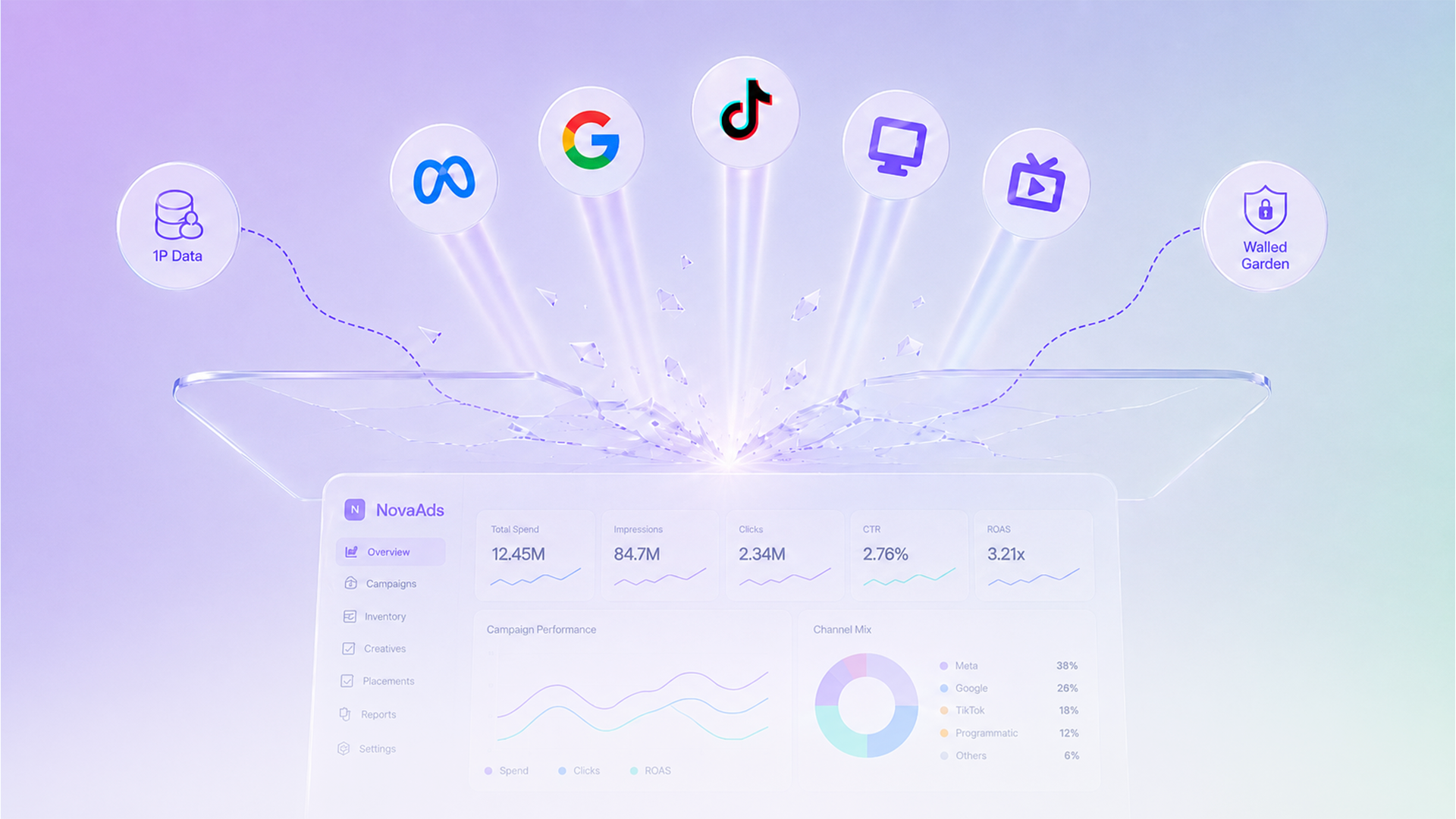
Most CTV inventory is bought programmatically through a demand-side platform (DSP). The workflow usually looks like this:
- Define the audience. Build segments from third-party data, your own first-party lists, or contextual signals such as the genre of content being watched.
- Set the buying parameters. Choose budget, geography, daypart, frequency caps, and the streaming apps or networks you want to appear in.
- Supply the creative. Upload video assets in the required lengths and aspect ratios. Some platforms offer creative builders if you do not have finished video.
- Launch and monitor. Track completion rate, cost per completed view, reach, frequency, and any conversion or brand-lift signals.
- Optimize. Shift budget toward the audiences, creatives, and publishers producing the best results.
Key CTV metrics to watch
| Metric | What it tells you |
|---|---|
| Video completion rate (VCR) | How often viewers watch the ad to the end |
| Cost per completed view (CPCV) | What you pay for each fully viewed ad |
| Reach and frequency | How many unique households saw the ad, and how often |
| Brand lift | Change in awareness, favorability, or purchase intent |
| Attribution and conversions | Whether viewers visited a site or bought after exposure |
CTV vs. Linear TV vs. Social Video

CTV Advertising: How It Works, Costs, and Strategy - CTV vs. Linear TV vs. Social Video.
Each channel plays a different role, and most mature media plans use more than one.
- Linear TV delivers mass simultaneous reach but limited targeting and slow optimization.
- CTV delivers television-scale attention with digital targeting, frequency control, and measurable outcomes.
- Social video delivers cheaper production testing, faster creative iteration, and precise direct-response tracking.
A practical pattern is to test creative concepts on social first, where feedback is fast and inexpensive, then scale the winners into CTV where production budgets and media costs are higher. That is why creative research tools matter: the concepts that perform on short-form video often indicate what will hold attention in a 15- or 30-second streaming spot.
If you are comparing research workflows before committing budget, this breakdown of PrimeSpy vs AdsLibrary vs Niche Scraper covers ad coverage, creative workflow, and pricing differences. For a broader look at how ad intelligence platforms fit together, see AdSpy info: what it is and how it works.
How to Research CTV and Video Ad Creative
CTV ads are expensive to produce, so the research stage deserves real effort. A structured approach:
- Collect reference ads. Study video ads running across streaming, social, and short-form platforms in your category.
- Look for repeat winners. An advertiser running the same concept across many placements is usually a signal that it performs.
- Analyze the first three seconds. Hooks that stop the scroll on social often translate into stronger CTV openings.
- Track how long concepts stay live. Long-running creatives suggest durable messaging rather than a short test.
- Adapt, do not copy. Use the structure, pacing, and angle as input for your own original creative.
This is where an ad intelligence tool such as PrimeSpy fits into the workflow. PrimeSpy lets marketers search ads by keyword, URL, or advertiser across Facebook, TikTok, and the Meta Ad Library, filter by performance signals, and review metrics such as reach, spend, and duplicate counts. For teams planning a CTV push, that data helps validate which angles are already working before you spend on video production. Product research features like daily top products and ad trackers are also useful for ecommerce brands deciding which items deserve a bigger media budget.
Building a creative testing ladder
- Stage 1: Social tests. Run low-cost variations of hooks, offers, and formats.
- Stage 2: Winner validation. Confirm performance with additional placements and audiences.
- Stage 3: CTV adaptation. Reformat the winning concept into a longer, brand-safe video for streaming.
- Stage 4: Measurement. Compare completion rates, brand lift, and conversion signals against your social benchmarks.
What CTV Advertising Costs
CTV pricing is usually negotiated through programmatic auctions rather than sold as fixed rate cards. Costs vary widely based on audience quality, inventory type, seasonality, and whether you are buying through a managed service or self-serve DSP.
Factors that move your cost:
- Inventory tier. Premium sports, live events, and top streaming apps cost more than long-tail inventory.
- Targeting depth. Narrow first-party segments can raise CPMs but improve efficiency.
- Frequency caps. Tight caps reduce wasted impressions but may require higher bids to maintain reach.
- Creative length. Longer spots consume more inventory and can affect pricing.
- Managed versus self-serve. Agencies and managed service fees add to the media cost.
Because of this variability, the most reliable approach is to start with a defined test budget, measure cost per completed view and downstream conversions, then scale only what clears your efficiency threshold.
Common CTV Advertising Mistakes
- Treating CTV like linear TV. Buying broad reach without audience data wastes the channel's main advantage.
- Reusing social creative unchanged. Vertical, fast-cut social ads often need reformatting for a television screen.
- Skipping frequency management. Without caps, viewers can see the same ad repeatedly and tune out.
- Measuring only reach. Completion, brand lift, and conversion signals tell you whether the campaign actually worked.
- Ignoring creative research. Launching untested concepts on expensive inventory is the fastest way to burn budget.
Related reading
- How to Use PrimeSpy with DropshipHunt: Ad Spy to Shopify - Learn how to use PrimeSpy with DropshipHunt: find validated winning ads, then build and launch AI Shopify product pages in minutes.
- PrimeSpy vs AdsLibrary vs Niche Scraper: 2026 Comparison - PrimeSpy vs AdsLibrary vs Niche Scraper compared on ad coverage, product research, creative workflow, pricing, and team fit for 2026.
- SwipeWell Review 2026: Swipe File Software Tested - Honest SwipeWell review: how the Chrome extension, dashboard, tagging, and Ad Finder work, plus pricing signals, limits, and who should skip it.
Sources and further reading
- What is connected TV? How CTV advertising works - Amazon Ads - Connected TV (CTV) advertising refers to ads shown on devices such as smart TVs or mobile phones that allow brands to reach streaming audiences.
- CTV advertising—what it is and how it works - Madhive - Connected TV (CTV) advertising refers to video ads that are delivered via a streaming service during a viewer's movie, TV show, or other video content — and ...
- CTV and OTT advertising - The Trade Desk - Connected TV advertising reaches groups of TV viewers that traditional advertising cannot. Precision target with our programmatic platforms. Learn More.
FAQ
What does CTV stand for in advertising?
CTV stands for connected TV. It refers to television sets and streaming devices connected to the internet that can serve video ads through streaming apps.
Is CTV the same as OTT?
They overlap but are not identical. OTT describes video delivered over the internet, while CTV typically refers to that viewing happening on a television screen rather than a phone, tablet, or laptop.
How is CTV advertising bought?
Most CTV inventory is purchased programmatically through a demand-side platform, either self-serve or with a managed service. Some platforms also offer direct or guaranteed deals.
What is a good video completion rate for CTV?
Completion rates on CTV tend to be high because many streaming environments do not allow skipping. Benchmarks vary by platform and format, so compare your campaigns against your own historical data rather than a single industry average.
Can small businesses advertise on CTV?
Yes. Programmatic buying allows smaller budgets and precise targeting, though premium inventory may require higher minimums. Many small brands start with a narrow audience and a modest test budget.
How do I find winning video ad ideas before producing a CTV spot?
Use an ad intelligence platform to study ads already running in your category, identify long-running creatives, and analyze hooks, offers, and formats. PrimeSpy supports this by letting you search ads across Facebook, TikTok, and the Meta Ad Library and review performance metrics before you invest in production.
Conclusion
CTV advertising gives brands television-scale attention with digital precision. The channel rewards advertisers who define audiences carefully, manage frequency, measure beyond reach, and bring tested creative into an expensive environment. Start with a clear test budget, track completion and conversion signals, and use ad research to validate concepts before production. When social testing and CTV scaling are connected by the same creative insights, each channel makes the other more efficient.
For teams building that research workflow, how to use PrimeSpy with DropshipHunt shows how validated ad concepts can move from research into a live storefront.