
Creative Intelligence for Ads: A Practical Guide
Most ad teams still decide which creative to run based on intuition, internal taste, or a single round of A/B testing. That approach leaves a lot on the table. Creative intelligence for ads replaces guesswork with structured analysis: it breaks ads into their component parts, links those parts to performance, and tells you why one execution beat another. This guide explains what creative intelligence is, how it works in practice, and how to build a workflow that turns creative data into better campaigns.
What Is Creative Intelligence for Ads?
First viewport screenshot of www.primespy.net.
Creative intelligence is the discipline of understanding why audiences engage with specific creative content. It goes beyond whether a campaign worked and answers which creative choices drove the result. That means deconstructing ads into identifiable elements—hooks, emotions, visual compositions, copy patterns, offers, and calls to action—then correlating those elements with outcomes like click-through rate, conversion rate, and return on ad spend.
Adobe and Winterberry Group describe this as the next frontier in advertising performance: after years of investment in audience targeting and media efficiency, the biggest remaining gains come from understanding creative quality. Their research found that 40–50% of creative assets produced never get activated in campaigns, and that US creative spend powered by creative intelligence is projected to reach $11.47 billion by 2028, growing roughly 23% annually. In short, creative intelligence helps teams stop wasting production budget and start investing in what actually moves performance.
Why Creative Intelligence Matters Now
Three shifts have made creative intelligence practical for everyday marketers, not just enterprise brands:
- Creative is the biggest remaining lever. Audience targeting and bidding are increasingly automated. The variable you still control is the ad itself.
- Analysis can be automated. Modern tools can catalog thousands of creative decisions—color palette, logo placement, hook type, emotional tone—and connect them to performance data.
- Competitor creative is visible. Ad libraries and ad spy tools expose what competitors are running, how long ads stay live, and which creatives they refresh most often.
How Creative Intelligence Works
First viewport screenshot of www.primespy.net.
1. Build a Creative Taxonomy
A taxonomy is a structured vocabulary for describing ads. Instead of saying an ad "feels engaging," you classify it: hook type (question, bold claim, demo), emotional trigger (urgency, aspiration, fear of missing out), visual composition (UGC-style, studio product shot, before-and-after), and copy structure (problem-solution, listicle, testimonial). Creads, for example, uses a taxonomy of 119 creative concepts, 95 visual compositions, 129 hook types, 45 emotions, and 50 psychological biases to score and generate ad concepts. You do not need a taxonomy that large to start—even 20–30 recurring elements will reveal patterns.
2. Score and Tag Every Asset
Once the taxonomy exists, every ad—yours and your competitors'—can be tagged and scored. This turns creative from an opinion into a dataset. You can then ask precise questions: Do testimonial hooks outperform product demos for cold traffic? Does a price overlay increase or decrease click-through rate? Which visual style appears most often in long-running competitor ads?
3. Connect Creative to Performance
Tagging alone is not intelligence. The value comes from linking creative attributes to outcomes while controlling for media and audience variables. Innovid, for instance, connects creative content, campaign performance, and audience response so teams can see which creative elements resonate with which segments. The same principle applies at any scale: pair your creative tags with platform metrics and look for statistically meaningful patterns rather than one-off winners.
4. Feed Insights Back Into Production
Creative intelligence is not just diagnostic—it is generative. Insights should inform briefs, pre-testing, and variant production. Adobe's research highlights pre-testing as a way to eliminate production waste: evaluating concepts against historical performance patterns before committing budget. The same logic applies to competitor research: if a hook style is working across your category, test it in your own voice rather than reinventing from scratch.
Creative Intelligence in Practice: A Workflow
First viewport screenshot of www.primespy.net.
Here is a practical workflow you can run with a small team and a modest tool stack.
- Define your creative elements. List the hooks, formats, emotions, and offers you use most often. Keep the list short and consistent.
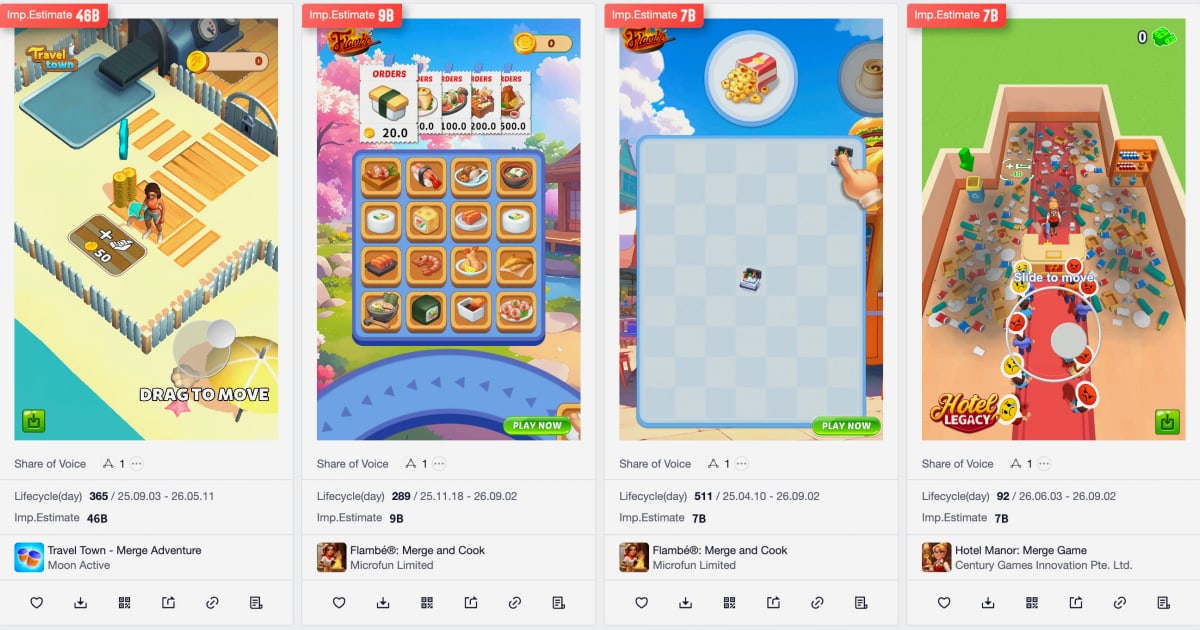
- Collect competitor creative. Use an ad intelligence tool to search ads by keyword, URL, or advertiser. PrimeSpy, for example, provides a library of over 120 million ads across Meta and TikTok with filters for ecommerce and regional research, so you can see which creatives competitors keep running and when they refresh them.
- Tag and score. Apply your taxonomy to both your ads and the competitor ads you collect. Note which elements appear in ads that have been live for weeks or months—longevity is a useful proxy for performance.
- Form hypotheses. Turn patterns into testable hypotheses: "UGC-style hooks with a problem-first opening will beat studio product shots for cold traffic."
- Pre-test and produce. Score new concepts against your hypothesis before production. Use AI creative tools to generate variants quickly, then validate them against your taxonomy.
- Measure and refine. Run controlled tests, log results against your creative tags, and update your taxonomy as patterns emerge.
For a deeper look at how ad intelligence platforms compare on coverage and workflow fit, see our ranking of the top ad intelligence platforms for 2026. If you want to connect research to AI-assisted production, our guide on using PrimeSpy with Nextify.ai walks through the handoff from ad research to AI creative generation.
Creative Intelligence vs. Traditional Creative Testing
| Dimension | Traditional testing | Creative intelligence |
|---|---|---|
| Starting point | Intuition and briefs | Structured taxonomy and historical patterns |
| Scope | One or two variants per test | Hundreds of creative attributes tracked over time |
| Speed | Slow, sequential tests | Faster hypothesis generation and pre-testing |
| Output | A winning ad | A reusable understanding of why it won |
| Risk | High production waste | Lower waste through pre-testing and scoring |
Traditional testing is not obsolete—it is the measurement layer. Creative intelligence makes each test more informative by connecting results back to specific creative choices.
Common Mistakes to Avoid
- Tagging without measuring. A taxonomy that is never linked to performance data is just a filing system.
- Overfitting to one winner. A single high-performing ad may reflect audience, timing, or budget rather than the creative itself. Look for patterns across multiple ads.
- Ignoring platform context. A hook that works on TikTok may flop on Meta placements. Track performance by platform and placement.
- Copying competitors blindly. Competitor ads show what is being tested, not necessarily what is working. Use longevity and repetition as signals, then validate with your own tests.
- Letting the taxonomy stagnate. Creative trends shift. Review and update your element list quarterly.
How Ad Intelligence Tools Support Creative Intelligence
First viewport screenshot of www.primespy.net.
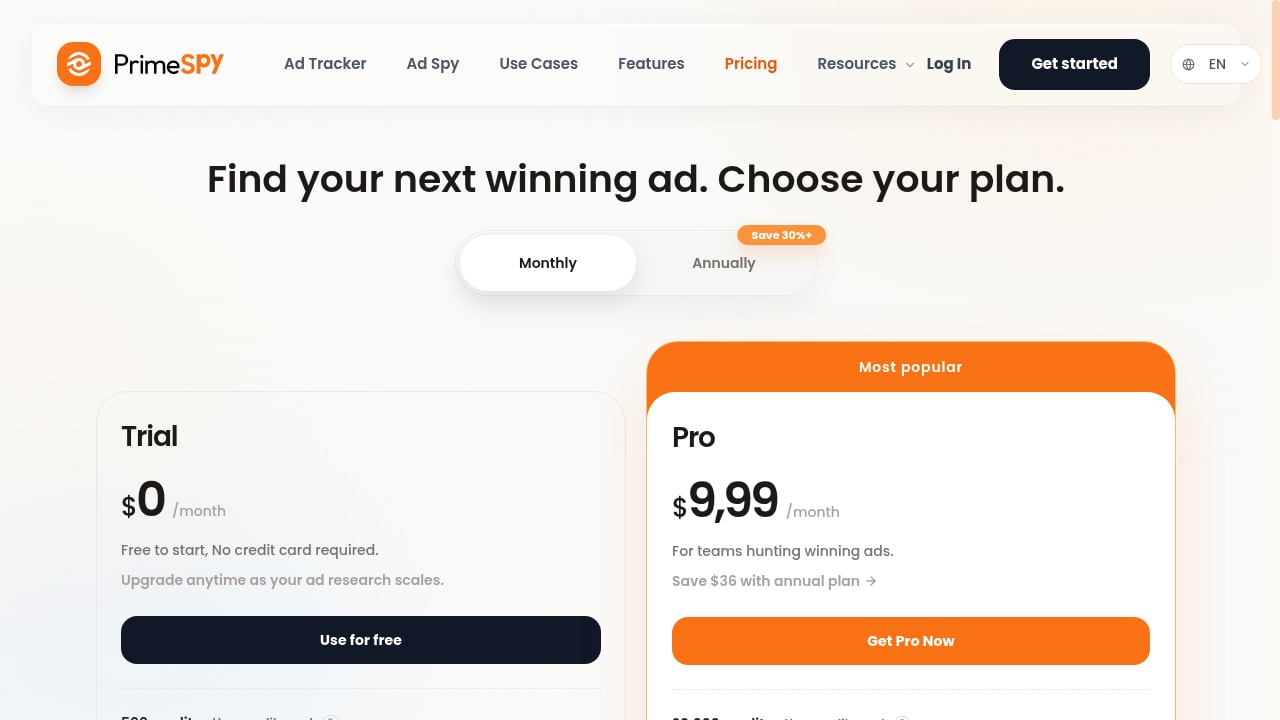
Ad intelligence platforms are the research layer of creative intelligence. They let you search competitor ads, filter by platform and region, track creative refreshes, and save or export ad lists for analysis. PrimeSpy is built for this use case: it monitors new ad creatives, landing page changes, and product updates in real time, and provides reach and spend signals alongside its ad library. For performance marketers, ecommerce brands, and agencies, that means competitor research can feed directly into the creative scoring process described above rather than sitting in a separate spreadsheet.
When evaluating tools, compare them on database size, platform coverage, filter depth, tracking capabilities, and pricing. Our comparison of PrimeSpy vs BigSpy and our PrimeSpy vs SpreshApp vs Swipekit breakdown can help you match a tool to your workflow.
Sources and further reading
- Creative intelligence and the future of marketing - Learn how creative intelligence helps brands cut production waste, scale personalization, and improve campaign performance across the content lifecycle.
- Creative Intelligence - Innovid's creative intelligence helps you instantly recognize and respond to the creative-to-audience connection, driving optimized performance across all channels and devices.
- What Is Creative Intelligence? | Creads - Discover creative intelligence: a structured taxonomy and scoring system using 119 concepts and psychological biases to power AI-driven advertising decisions.
FAQ
What is creative intelligence in advertising?
Creative intelligence is the practice of analyzing ad creative at the element level—hooks, visuals, emotions, copy—and connecting those elements to performance data. It answers why an ad worked, not just whether it did.
How is creative intelligence different from A/B testing?
A/B testing compares variants to find a winner. Creative intelligence explains the result by attributing performance to specific creative attributes, and it uses historical patterns to guide what you test next.
Do small teams need creative intelligence?
Yes. Small teams benefit most from reducing production waste. A lightweight taxonomy and consistent tagging can reveal patterns within a few campaigns, without enterprise tooling.
What data do I need to get started?
You need ad-level performance metrics from your ad platforms and a consistent way to tag creative elements. Competitor ad data from an ad intelligence tool adds context on what is working in your category.
Can creative intelligence be automated?
Partially. Tools can automatically categorize creative and surface patterns, as Innovid and Creads describe. Human judgment is still needed to interpret results and set strategy.
Conclusion
Creative intelligence for ads turns creative from a cost center into a measurable asset. Start with a simple taxonomy, tag your ads and your competitors' ads consistently, and connect those tags to performance data. Use ad intelligence tools to gather competitor creative at scale, pre-test concepts before production, and refine your element list as patterns emerge. The teams that treat creative as data—not just design—will be the ones that consistently find winning ads and scale them profitably.
For a broader view of the market, read our Adbeat review to see how display ad intelligence fits into a modern creative research stack.